
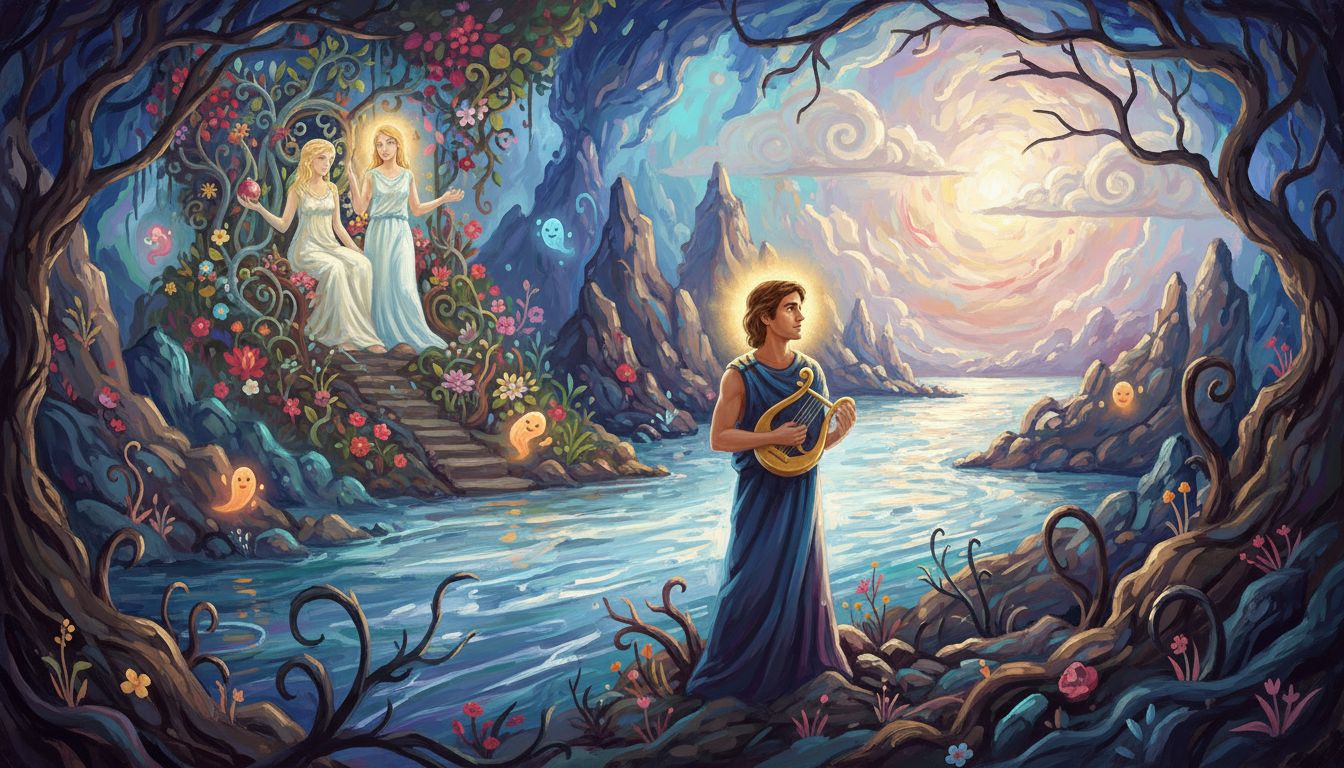
How Does the Underworld Symbolism Reflect Power and Hope in Orpheus?
Quick Answer
The underworld in the myth of Orpheus symbolizes despair and the limits of human power, while Hadestown presents it as a controlled, industrial space that critiques societal structures. Both interpretations convey deep messages about love, loss, and the quest for freedom.
The story of Orpheus and Eurydice has captivated audiences for centuries, and the contrasting depictions of the underworld in the original myth and the modern musical *Hadestown* provide rich ground for analysis. Understanding the symbolism of the underworld in each version can illuminate the overarching themes of power, hope, and freedom present in both narratives.
In the written myth, the underworld is portrayed as a distant and mysterious realm. It represents an ultimate fate that is both terrifying and final. This setting creates a sense of despair, as it suggests that once a soul is lost to the underworld, there is little hope for redemption. For Orpheus, the journey to retrieve Eurydice becomes a desperate gamble against the laws of life and death. The myth emphasizes the limits of human power, as Orpheus can only plead for Eurydice's return, and even then, he must abide by strict conditions. His eventual loss of Eurydice highlights the tragic nature of love and the futility of trying to manipulate fate—a powerful message about the human experience and the hope that often accompanies love.
Conversely, *Hadestown* reimagines the underworld as an industrial, oppressive environment, much like a factory. This version starkly contrasts the original, making the underworld feel more like a reflection of societal control and the struggles of working-class individuals. The repetitive nature of life in Hadestown symbolizes how people can become trapped within systems that strip away their individuality and hope. In this rendition, the journey to the underworld becomes a critique of the power structures that govern our lives, illustrating that hope can exist even in dark circumstances. Orpheus's efforts to rescue Eurydice are not just personal; they resonate with broader themes of resistance against societal constraints.
When comparing the messages about power, hope, and freedom in both versions, we can see that while the written myth focuses on the personal tragedy of love and the inevitable loss that follows, *Hadestown* expands the narrative to include a commentary on society. The underworld in *Hadestown* becomes a metaphor for the struggles of the marginalized, where hope can still flicker, even when faced with harsh realities. Both interpretations ultimately emphasize that love is powerful but can also lead to profound sorrow, offering different lenses through which to view human experience.
In conclusion, the underworld serves as a vital symbol in both the myth and *Hadestown*, reflecting the characters' struggles and aspirations. Understanding these layers can deepen our appreciation for these timeless stories and their messages about the human condition. Whether through the despair of the original myth or the industrial critique of *Hadestown*, the journey of Orpheus offers rich insights into the complexities of love, loss, and the quest for freedom in challenging circumstances.
Was this answer helpful?