
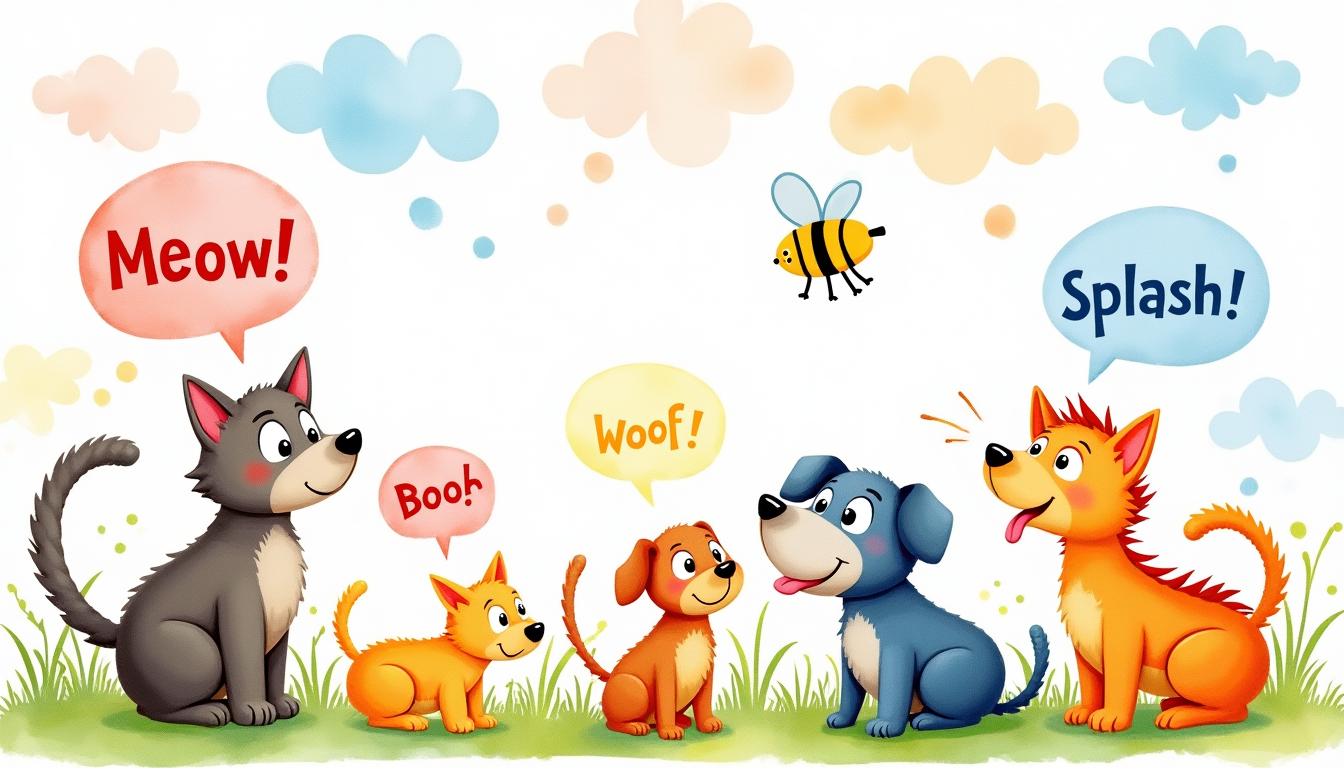
What is Onomatopoeia? A Simple Explanation for Students
Quick Answer
Onomatopoeia refers to words that imitate the sounds they describe. Common examples include 'buzz' for a bee and 'bang' for a loud noise.
Onomatopoeia is a fascinating linguistic concept where words are formed based on the sounds they represent. This means that the word itself mimics the noise of the object or action it describes, adding a layer of vivid imagery to language. Words like 'sizzle,' 'clang,' and 'whisper' are all examples of onomatopoeia, and they can make writing more engaging and expressive.
In literature and everyday language, onomatopoeia helps create a more immersive experience. For instance, when you read a comic book, the words used to depict sounds—like 'bang!' and 'pow!'—not only convey action but also engage your auditory senses. This connection between sound and meaning is what makes onomatopoeia so unique.
### Common Examples of Onomatopoeia
- **Animal Sounds:** These words mimic the sounds made by animals. For instance, 'woof' represents a dog barking, 'meow' represents a cat, and 'moo' represents a cow. These words help readers or listeners imagine the scene and the sounds within it.
- **Action Sounds:** Many onomatopoeic words describe actions. Words like 'crash' indicate something breaking, while 'bang' can indicate a loud noise from an explosion. Each of these words evokes a specific sound that enhances the imagery in a narrative.
- **Nature Sounds:** Onomatopoeia is also prevalent in descriptions of nature. Words like 'splash' describe the sound of water, while 'rustle' refers to the sound of leaves moving in the wind. These words help bring the environment to life and make descriptions more dynamic.
### Real-World Applications
Understanding onomatopoeia can also enhance your writing skills. When you use these sound words effectively, they can add excitement and clarity to your stories or essays. For instance, instead of simply saying, 'The thunder was loud,' you could write, 'The thunder rumbled with a deep, booming *bang!*' This not only gives your readers a clearer picture but also makes your writing more enjoyable to read.
### In Summary
Onomatopoeia is an essential part of language that helps us express sounds through words. From comic books to poetry and everyday conversations, these sound-imitating words play a significant role in enriching our communication. So next time you hear a sound, think about how it could inspire a new word or phrase!
By incorporating onomatopoeia into your language arts studies, you can improve your writing and understanding of sound in literature. Whether you're reading or writing, paying attention to these unique words can enhance your appreciation for language.
Was this answer helpful?