
How to Analyze a Science Experiment Using the C-E-R Method
Quick Answer
The C-E-R method stands for Claim, Evidence, and Reasoning, and is used to analyze scientific findings. To effectively utilize this method, clearly state your claim, support it with evidence, and explain your reasoning.
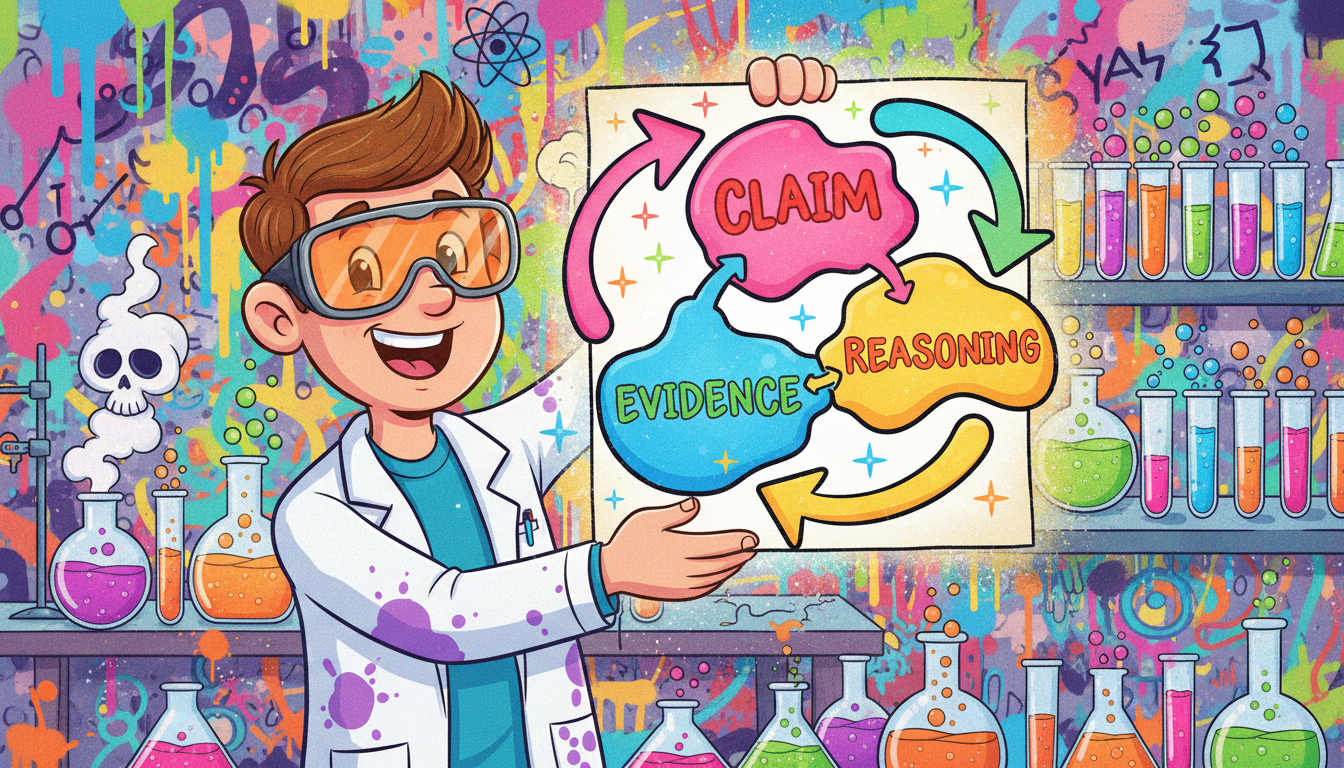
The C-E-R (Claim, Evidence, Reasoning) method is a powerful framework that helps students articulate their scientific findings clearly and effectively. This method is especially useful for lab reports and experiments, as it guides you in structuring your analysis in a logical way. Let’s break down each component of this method to help you complete your **MISSION ANALYSIS (CER)** assignment.
**1. CLAIM** – This is your main conclusion based on your experiment. It should be a clear and concise statement that answers the question posed by your assignment. For example, if your experiment tested different magnetic cores, your claim might be something like: "The **iron nail core** was the most effective because it produced the strongest electromagnet."
**2. EVIDENCE** – This section is where you provide the data and observations from your experiment to support your claim. You might include specific measurements, observations, or results that demonstrate why your chosen core was the most effective. For instance, you could mention how many paper clips the electromagnet picked up with each core material or provide numerical data showing the current produced by each core. Remember to present your evidence clearly, possibly in the form of charts or tables, to make it easier for readers to understand.
**3. REASONING** – In this part, you explain why your evidence supports your claim. This is where you can introduce relevant scientific concepts, such as *permeability* and *domains*, and discuss how they relate to the performance of the different cores. For example, you could explain that iron has higher permeability than steel, which allows it to become magnetized more effectively, resulting in a stronger electromagnet. This helps to bridge the gap between your evidence and your claim, providing a complete picture of your findings.
By breaking down your analysis into these three clear sections, you not only make your conclusions easier to understand but also enhance the quality of your scientific writing. The C-E-R method helps you develop critical thinking skills and understand the reasoning behind scientific principles, which are essential for any aspiring scientist.
In real-world applications, the C-E-R method can be seen in scientific journals and research papers, where authors must justify their claims with solid evidence and reasoning. This practice not only applies to science but is also valuable in other fields, encouraging clear communication and logical thought.
In summary, using the C-E-R framework allows you to conduct a thorough analysis of your scientific experiments and articulate your findings effectively. With practice, you will become more comfortable with this method and improve your overall writing and analytical skills in science.
Remember, each part of the C-E-R method is crucial for a comprehensive analysis, and mastering it will greatly benefit your academic journey!
Was this answer helpful?