
Does a Roller Coaster Lose Potential Energy When Closer to Start?
Quick Answer
No, the statement is incorrect. As roller coaster cars approach their starting point (the top of the first hill), they actually have maximum potential energy due to their height above the ground.
Understanding how energy works in a roller coaster can be fascinating and is crucial for grasping basic physics concepts. First, let's clarify what gravitational potential energy (GPE) means. GPE is the energy an object possesses due to its position in a gravitational field, particularly its height above the ground. The key takeaway is that the higher an object is, the more gravitational potential energy it has. Conversely, as it descends, it loses height and thus loses potential energy.
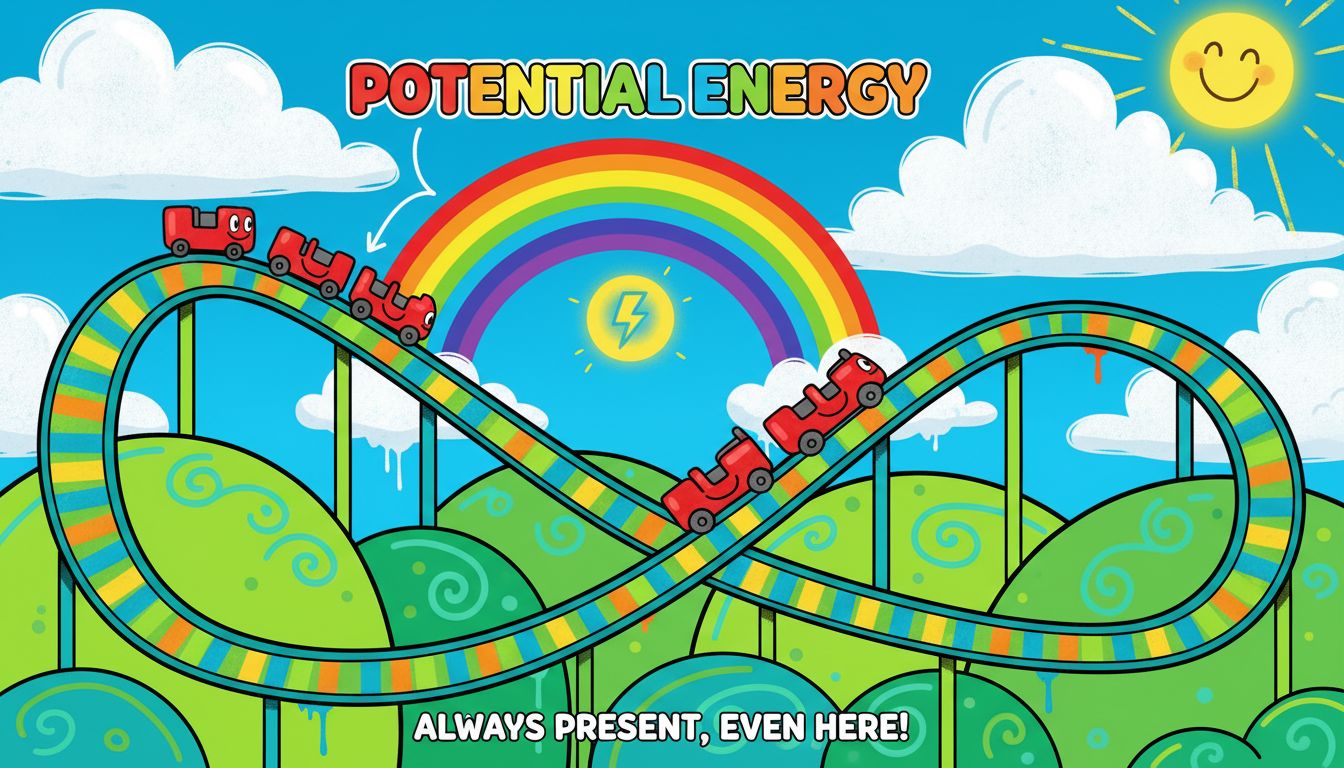
In the context of a roller coaster, think of the ride as a thrilling demonstration of energy conversion. At the very top of the first hill, the roller coaster cars are at their highest point. Here, they possess maximum gravitational potential energy because they are elevated significantly above the ground. At this point, their kinetic energy (the energy of motion) is relatively low because they are not yet moving fast.
As the roller coaster begins its descent down the hill, it loses height. Consequently, this loss in height corresponds to a decrease in gravitational potential energy. However, this doesn't mean the roller coaster is losing energy overall. Instead, the potential energy is being converted into kinetic energy. As the coaster drops, it speeds up—gaining kinetic energy—while simultaneously losing gravitational potential energy. This conversion is a fundamental principle of energy conservation, where energy is neither created nor destroyed but merely changes from one form to another.
Now, referring back to the statement you mentioned: “The closer cars of a roller coaster get to their starting point, the less potential energy they have.” This is indeed false if we interpret the “starting point” as the top of the first hill. As the cars ascend to this peak, they accumulate potential energy. Therefore, the closer they are to this starting point, the more potential energy they have.
To visualize this, imagine a classic roller coaster ride. As you climb the steep hill, your anticipation builds. Once you reach the top, you have the most potential energy, and as you plunge down, you feel a rush of speed as that potential energy transforms into kinetic energy. This is what makes roller coasters thrilling!
Understanding potential energy not only applies to amusement parks but also to various real-world situations. For instance, consider how hydroelectric dams work. Water stored at a height has gravitational potential energy that can be converted into electricity as it flows down. This principle applies to many areas of physics and engineering and highlights the importance of energy transformation in our daily lives.
In summary, as roller coaster cars approach their peak starting point, they actually accumulate potential energy, making the original claim incorrect. Energy conversion is a core principle in physics that explains many phenomena we encounter, both in fun environments like amusement parks and in practical applications in the field of engineering and science.
Was this answer helpful?