
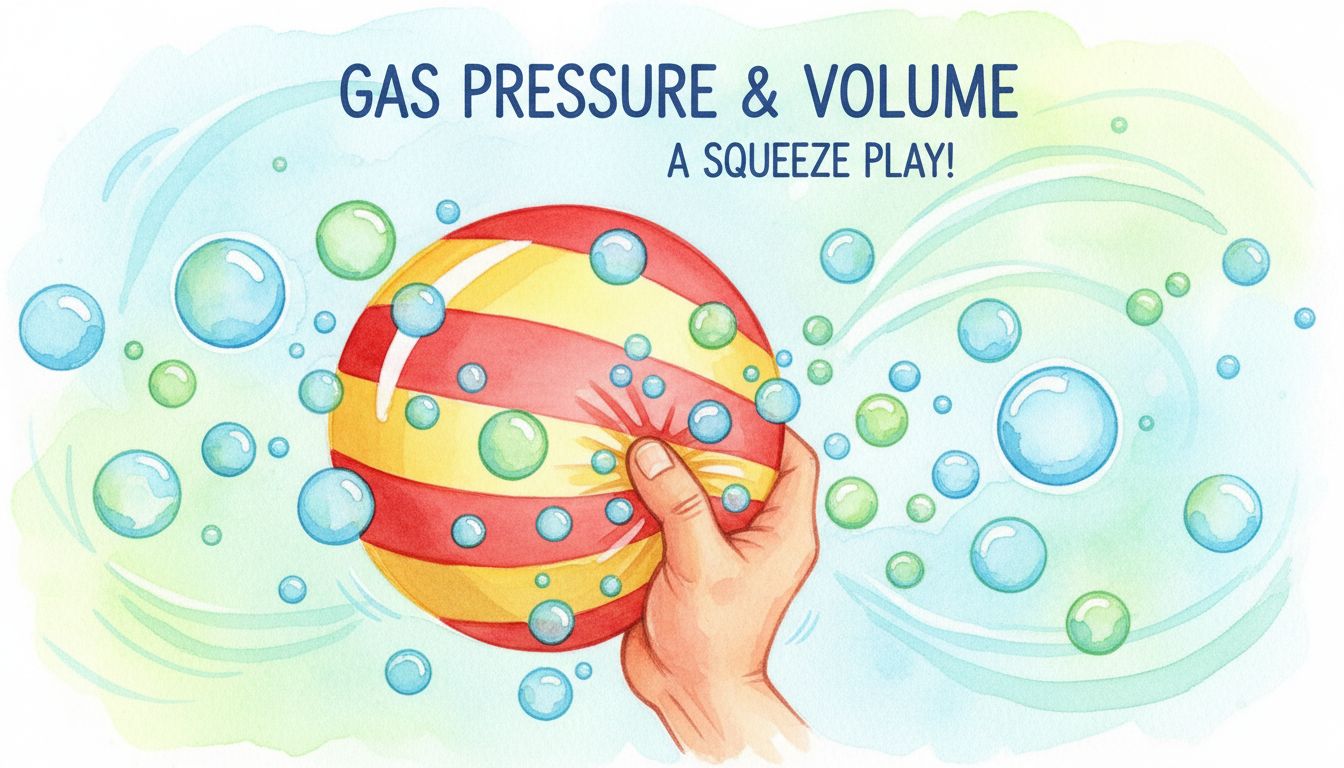
Understanding Gas Pressure and Volume in Science: FAQs
Quick Answer
Gas pressure is the force exerted by gas particles on their container's walls. Volume refers to the space a substance occupies, crucial for understanding gas behavior in various contexts.
Understanding gas pressure and volume is fundamental in science, especially when studying gases and their behavior.
**Gas Pressure**: The pressure of a gas is defined as the force that gas particles exert on the surfaces of their container. This force arises from the constant motion of gas particles, colliding with the walls of their container. When gas particles move faster, such as when the temperature increases, they collide more frequently and with greater force, leading to higher pressure.
For example, when you heat a balloon, the gas inside expands, and the increased motion of the particles raises the pressure on the balloon's walls. This is why balloons can pop if heated too much or filled beyond their capacity.
**Volume**: In scientific terms, volume is the measure of the amount of space that a substance occupies. This is particularly important when discussing gases and liquids. While we often think of volume as the amount of liquid a container can hold, in scientific contexts, especially with gases, volume refers to the entire space available within the container.
For instance, consider a gas in a syringe. If you pull the plunger back, you increase the volume available for the gas. As the volume increases, the gas pressure decreases if the temperature remains constant. This principle is known as Boyle's Law, which states that pressure and volume are inversely related for a fixed amount of gas at a constant temperature.
When working with liquids, the term 'volume' can also refer to the amount of liquid that fills a container. However, it's crucial to remember that volume in science encompasses all kinds of substances and their capabilities to fill space.
In summary, gas pressure is all about the force exerted by moving gas particles, while volume measures how much space a substance occupies. Understanding these concepts not only aids in scientific studies but also has practical applications in various fields, from engineering to meteorology. Keeping these definitions clear can help you excel in your science classes and beyond.
Was this answer helpful?