
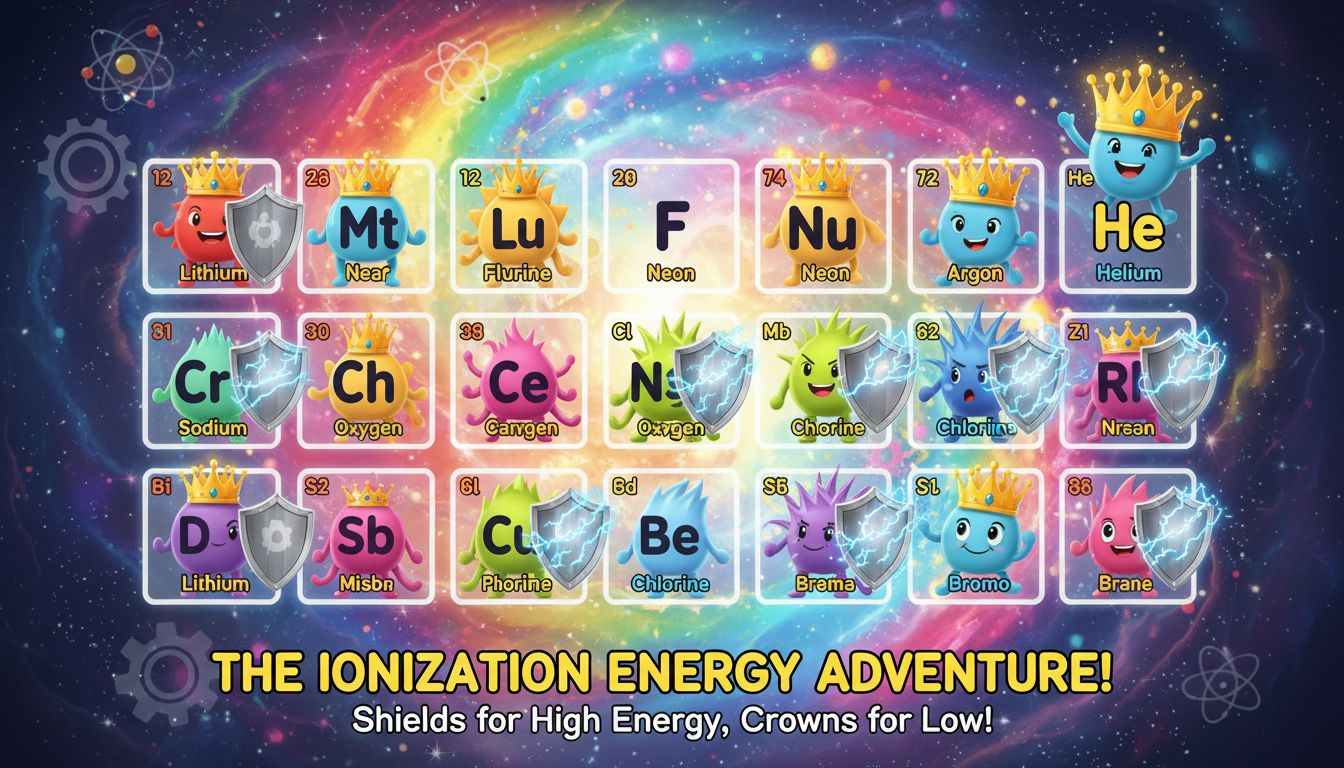
What is Ionization Energy and How Does It Compare Between Elements?
Quick Answer
Yes, chlorine has a higher ionization energy than magnesium. Ionization energy refers to the energy required to remove an electron from an atom, and chlorine's nearly full valence shell makes it hold onto its electrons more tightly.
Ionization energy is a fundamental concept in chemistry that refers to the energy required to remove an electron from an atom or ion. When comparing different elements, it's essential to understand that not all atoms are created equal in this regard. For example, chlorine (Cl) has a higher ionization energy than magnesium (Mg), which can be attributed to their electronic configurations and positions in the periodic table.
Chlorine, located in group 17 of the periodic table, has seven electrons in its outermost shell. It is just one electron short of achieving a stable octet, similar to the noble gases. This makes chlorine very eager to gain an additional electron to achieve stability, resulting in a strong attraction to its electrons. As a result, removing an electron from chlorine requires a significant amount of energy, making its ionization energy quite high.
On the other hand, magnesium, which is found in group 2, has two valence electrons. While these electrons are still bound by the nucleus, they are not as tightly held as those in chlorine. Magnesium tends to lose its two outer electrons to achieve a stable electron configuration, which is why its ionization energy is lower than chlorine's.
To illustrate this, think of ionization energy like the effort it takes to pull an object away from a magnet. Chlorine's high ionization energy means it is like a powerful magnet—very difficult to pull away an electron. Conversely, magnesium's lower ionization energy makes it easier to remove an electron, similar to a weaker magnet.
Understanding ionization energy has real-world implications, especially in the fields of chemistry and materials science. For example, knowing how easily an atom can lose or gain electrons helps chemists predict how substances will react with one another. This knowledge is crucial in the development of new materials, pharmaceuticals, and more.
In summary, the difference in ionization energies between chlorine and magnesium highlights the importance of atomic structure in determining chemical properties. The stability of an atom's electron configuration plays a significant role in how it interacts with other atoms, influencing everything from chemical reactions to the formation of compounds. For further study, check out the equations section for a simple formula that represents ionization energy, as well as additional resources on electron configurations and periodic trends.
Was this answer helpful?