
Which Element is Least Malleable: Sr, Cu, P, or Sb?
Quick Answer
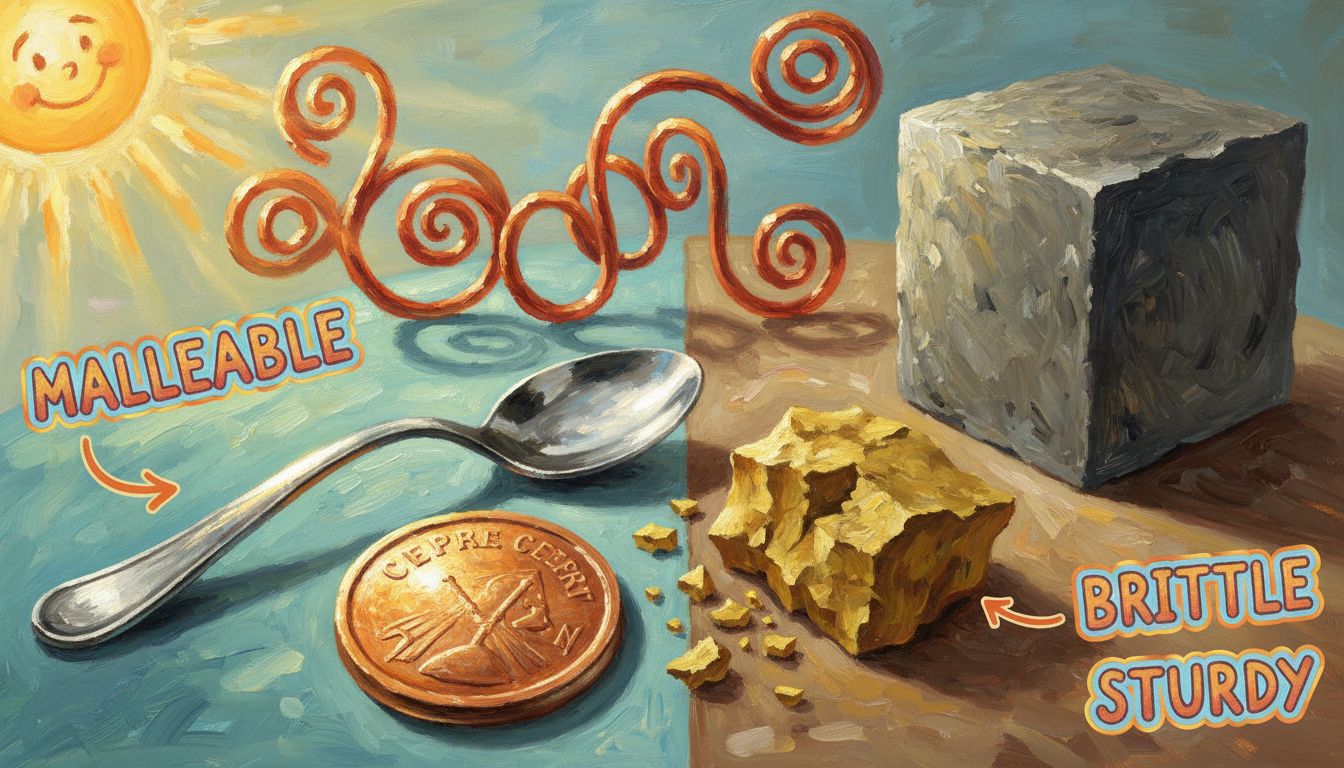
Phosphorus (P) is the least malleable element among Sr, Cu, P, and Sb. Unlike metals that can be easily shaped, phosphorus is brittle and breaks easily.
Malleability is an important property that describes how easily a material can be deformed under compressive stress, such as being hammered or rolled into thin sheets. Among the elements listed—Strontium (Sr), Copper (Cu), Phosphorus (P), and Antimony (Sb)—Phosphorus is indeed the least malleable.
To understand why, let’s look at the nature of these elements:
- **Strontium (Sr)**: Strontium is an alkaline earth metal, which means it shares properties typical of metals. Metals are generally malleable, allowing them to be shaped without breaking. Strontium can be deformed under stress, making it relatively malleable.
- **Copper (Cu)**: Copper is one of the most malleable metals known. It can be easily drawn into wires or rolled into sheets, which is why it's widely used in electrical wiring and plumbing. Its high malleability makes it a valuable material in various applications.
- **Antimony (Sb)**: Antimony is classified as a metalloid, possessing characteristics of both metals and nonmetals. While it shows some malleability, it is more brittle than metals, meaning it can break rather than bend when sufficient force is applied.
- **Phosphorus (P)**: Phosphorus is a nonmetal and, depending on its allotrope, can exhibit significant brittleness. The most common forms, such as white and red phosphorus, are not malleable. Instead, they tend to break or crumble under pressure. For example, white phosphorus is so brittle that it can shatter easily when struck, reinforcing its classification as the least malleable element among the ones listed.
Understanding element properties like malleability is essential in fields such as materials science and engineering. For instance, knowing that metals like copper are malleable allows engineers to design electrical components that require bending without breaking. In contrast, recognizing that phosphorus is brittle helps in handling and storing it safely, as it can pose risks if mishandled.
In summary, your choice of phosphorus (P) as the least malleable element among the options is correct. Its brittle nature means it does not bend easily, making it distinct from the more malleable metals and metalloids in the list. For further clarification, consider reviewing a simple table summarizing the malleability of various elements, which can enhance your understanding of how different materials behave under stress.
Was this answer helpful?