
What is the Weimar Republic? A Comprehensive Overview
Quick Answer
The Weimar Republic was Germany's government from 1919 to 1933, marking its first attempt at democracy after World War I. It faced numerous challenges, including economic crises and political instability, ultimately leading to the rise of the Nazi party.
The Weimar Republic refers to the democratic government established in Germany after World War I, lasting from 1919 until 1933. Named after the city of Weimar, where the new constitution was drafted, this period marked Germany's first significant attempt at a democratic form of governance. The Weimar Republic was characterized by elected officials, a parliamentary system, and a commitment to civil liberties like freedom of speech and assembly.
However, this new democracy faced a multitude of challenges almost from the start. One of the most significant issues was the economic turmoil stemming from the aftermath of World War I. The Treaty of Versailles, which ended the war, imposed heavy reparations on Germany. This led to severe economic strain, culminating in hyperinflation during the early 1920s. Many citizens' savings became worthless, and the value of money plummeted, causing widespread discontent and hardship.
In addition to economic issues, the Weimar Republic was plagued by political instability. Various extremist parties emerged, including both far-left communists and far-right nationalists, leading to frequent clashes and violence. The political landscape was often marred by attempts to undermine the democratic government and seize power through force. One notable event was the occupation of the Ruhr in 1923 by French and Belgian troops, which was a response to Germany's failure to meet its reparations obligations. This event sparked strikes and further economic woes.
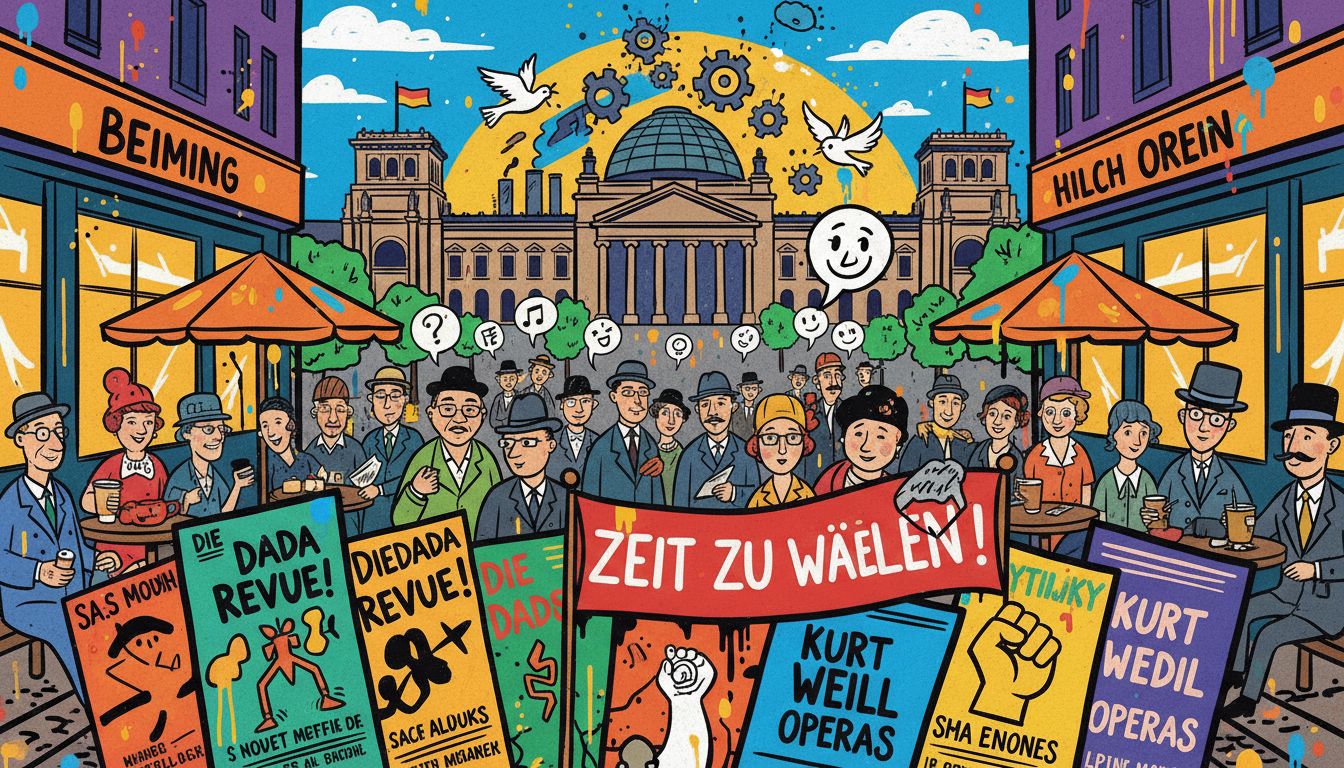
Despite these challenges, the Weimar Republic experienced a brief period of relative stability and cultural flourishing in the mid-1920s, often referred to as the "Golden Twenties." During this time, Germany saw advancements in art, music, and science, with cities like Berlin becoming cultural hubs. However, the global economic downturn caused by the Great Depression in 1929 brought an end to this period of stability. The economic crisis led to massive unemployment and social unrest, which severely weakened the Weimar government.
The political and economic turmoil ultimately created an environment where extremist parties, particularly the Nazis led by Adolf Hitler, could gain traction. In 1933, Hitler was appointed Chancellor, marking the end of the Weimar Republic and the beginning of a totalitarian regime. This historical period illustrates the complexities of establishing a democracy in a nation recovering from war and economic hardship, highlighting how fragile democratic institutions can be when faced with significant challenges.
Understanding the Weimar Republic is crucial for grasping the events that led to World War II and the rise of fascism in Europe. It serves as a reminder of the importance of stable governance and the need for resilient democratic institutions.
Was this answer helpful?