
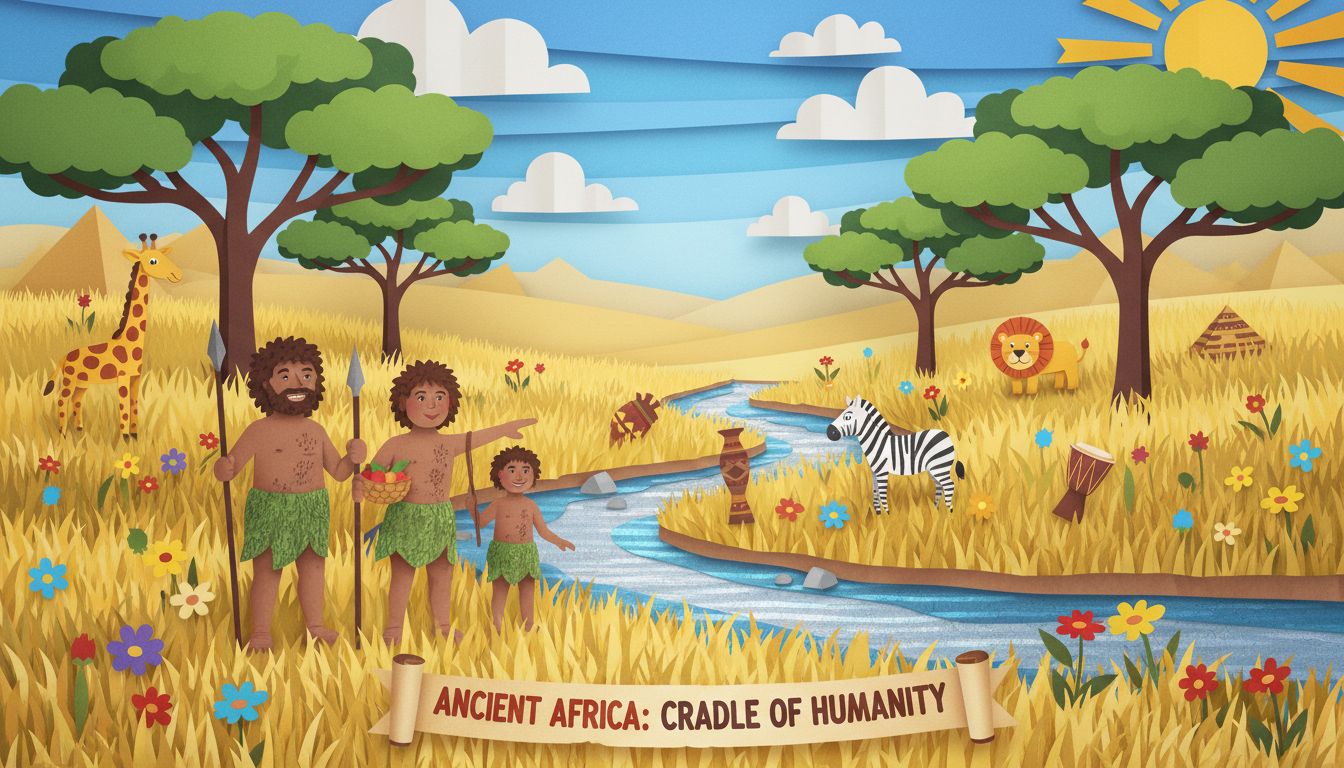
Why is Africa Called the Cradle of Humankind?
Quick Answer
Africa is called the 'cradle of humankind' because it's where the oldest human ancestors' fossils have been found. This evidence shows that our earliest relatives evolved in Africa millions of years ago.
Africa is often referred to as the 'cradle of humankind' due to the significant archaeological discoveries made across the continent that trace the origins of our species. This title highlights Africa's importance in understanding human evolution, as it is where the oldest known fossils of early hominins have been unearthed.
To understand why Africa holds this title, let's explore some key points:
1. **Oldest Fossils Found**: The oldest fossils of human-like ancestors, known as hominins, have been discovered in various regions of Africa. For instance, fossils of **Sahelanthropus tchadensis**, thought to be about 7 million years old, were found in Chad. This species exhibits both ape-like and human-like characteristics, providing crucial insights into our evolutionary journey.
2. **Significant Discoveries**: Other important fossils include **Ardipithecus ramidus**, approximately 4.4 million years old, discovered in Ethiopia. This species shows evidence of walking upright, which is a key trait in human evolution. Additionally, the famous fossil known as **'Lucy'**, belonging to the species **Australopithecus afarensis**, is about 3.2 million years old and was also found in Ethiopia. Lucy's well-preserved skeleton has contributed significantly to our understanding of early bipedalism.
3. **Evolving Traits**: These fossils illustrate a gradual transition from ape-like features to more human-like traits. This evolution includes adaptations such as walking on two legs, which allowed early humans to travel long distances and adapt to various environments.
4. **Geological Context**: Africa's diverse landscapes, including vast deserts, grasslands, and rift valleys, have played a crucial role in shaping human evolution. The East African Rift System, for example, has created unique habitats that fostered the evolution of various species, including our ancestors.
5. **Cultural Significance**: Understanding Africa as the cradle of humankind also emphasizes the cultural and historical importance of the continent. It reminds us of our shared ancestry and the rich diversity of cultures and languages that have developed over thousands of years.
In real-world applications, appreciating Africa's role in human history encourages global awareness and respect for the continent's contributions to humanity. It also motivates further research and exploration to uncover more about our origins and the factors that shaped our evolution.
In summary, Africa's designation as the cradle of humankind is backed by substantial fossil evidence and geological insights. This title not only highlights the continent's significance in the story of human evolution but also fosters a deeper understanding of our shared heritage as a species.
Was this answer helpful?