
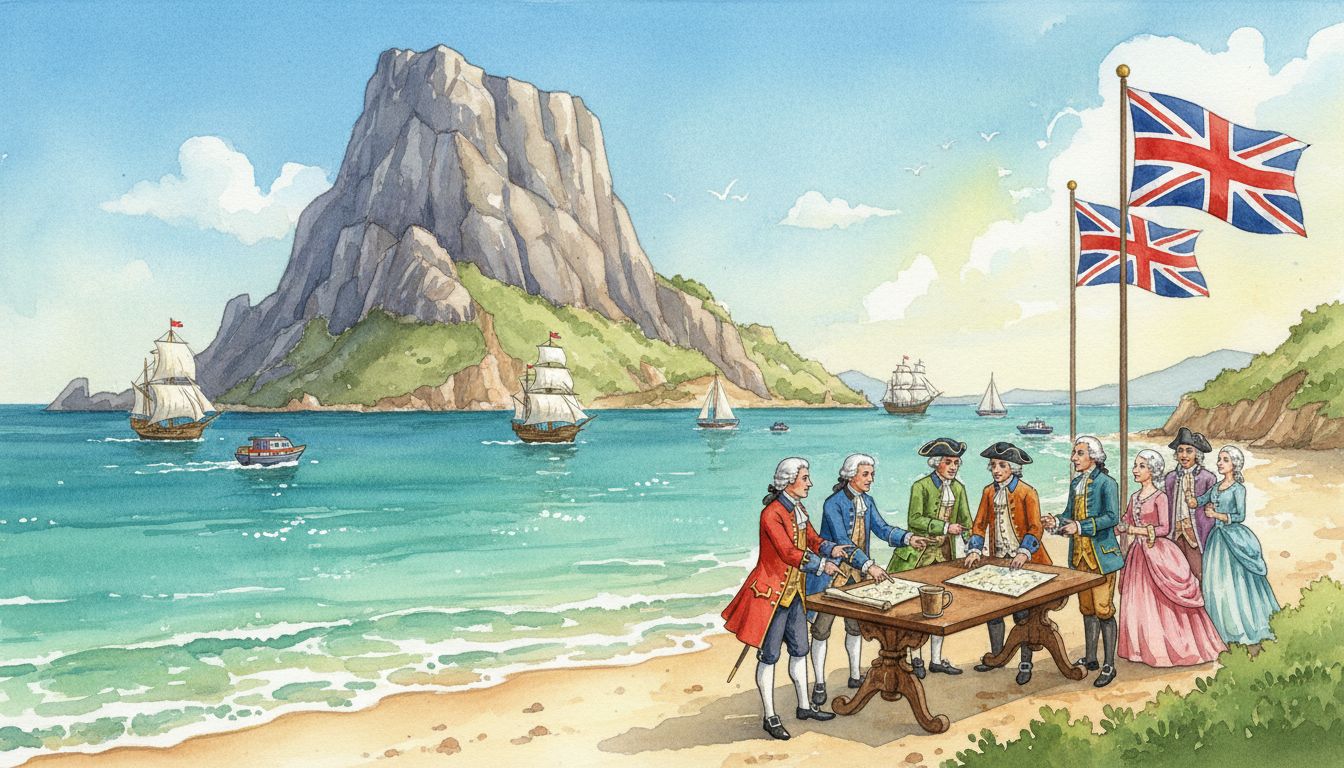
Why Does Gibraltar Belong to Great Britain? Exploring Its History
Quick Answer
Gibraltar belongs to Great Britain due to historical events dating back to the early 18th century. Captured during the War of the Spanish Succession, it was formally ceded to Britain by Spain in the Treaty of Utrecht in 1713.
Gibraltar is a small but strategically significant territory located at the southern tip of the Iberian Peninsula, bordered by Spain. Despite its geographical proximity to Spain, Gibraltar is a British Overseas Territory, and its history explains this unusual political situation.
The story of Gibraltar's connection to Great Britain dates back to the early 18th century, during a conflict known as the War of the Spanish Succession. This war, which lasted from 1701 to 1714, involved several European powers competing for control over the Spanish throne. In 1704, British and Dutch naval forces captured Gibraltar from Spain, taking advantage of the turmoil in the region.
Following its capture, Gibraltar was formally ceded to Britain by Spain in 1713 through the Treaty of Utrecht. This treaty marked a significant shift in territorial control and secured British sovereignty over Gibraltar. Since then, Gibraltar has remained a British Overseas Territory, which means it is under British jurisdiction but not part of the UK itself.
The territory is home to around 34,000 residents, most of whom are British citizens. It has its own local government and legislature, but certain matters such as defense and foreign affairs are managed by the UK. The culture of Gibraltar is a unique blend of British and Mediterranean influences, evident in its language, cuisine, and festivals.
Gibraltar's location is crucial as it controls the entrance to the Mediterranean Sea from the Atlantic Ocean, making it a key point for maritime navigation. This has historically made Gibraltar a valuable military and commercial outpost. Today, it is also known for its famous rock, the Rock of Gibraltar, which is a popular tourist attraction and a natural reserve for various species, including the Barbary macaque, the only wild monkeys found in Europe.
In summary, Gibraltar’s status as a British Overseas Territory is rooted in historical events from the early 18th century. Its unique geography and cultural heritage continue to make it a fascinating subject of study for students interested in geography and history. Understanding the complexities of Gibraltar's political status can provide insights into broader themes of colonialism, nationalism, and international relations.
Was this answer helpful?