
What Are the Best Examples of the Law of Superposition?
Quick Answer
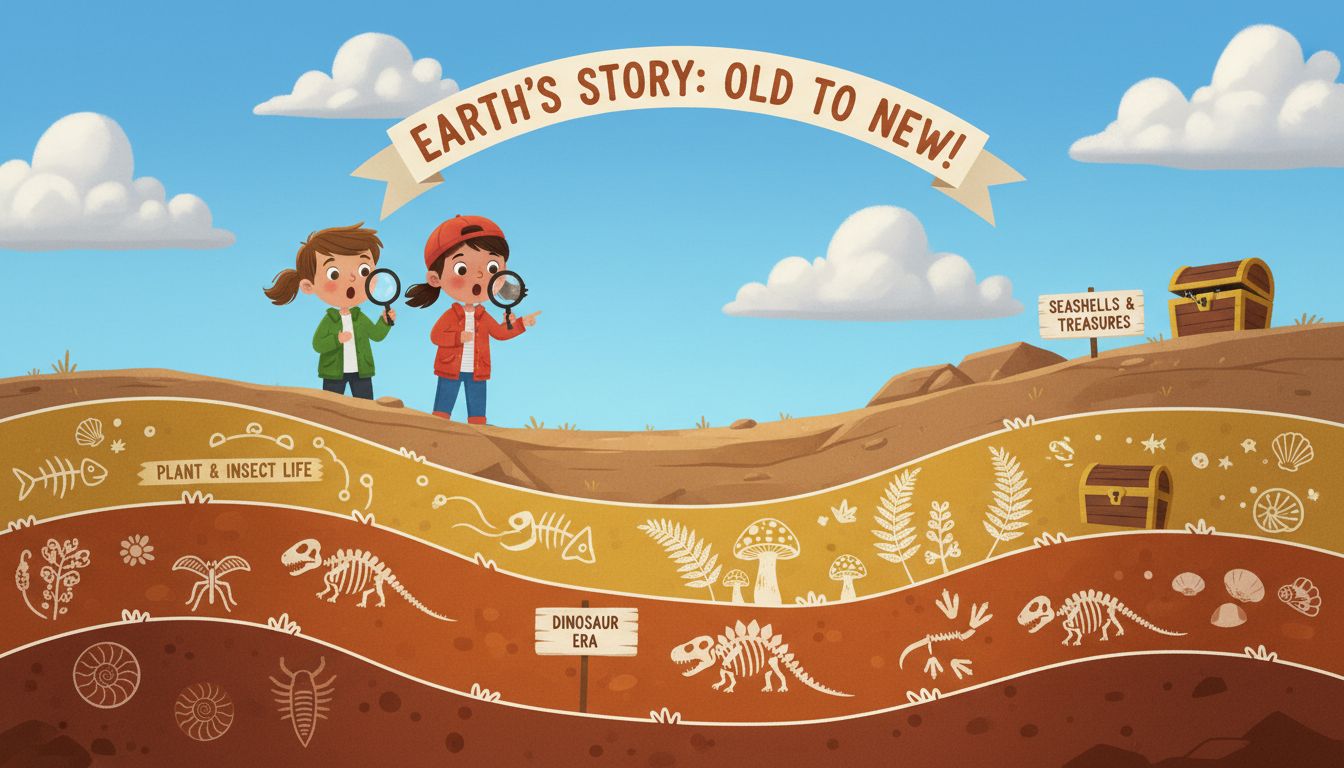
The Law of Superposition states that in undisturbed sedimentary rock layers, older layers are found at the bottom and younger layers at the top. Notable examples include the Grand Canyon and the sedimentary rock formations in the Rocky Mountains.
The **Law of Superposition** is a fundamental principle in geology that helps scientists understand the chronological sequence of rock layers. This law states that in undisturbed sedimentary rock formations, the oldest layers are found at the bottom, while the youngest layers are at the top. This concept is crucial for determining the relative ages of rocks and fossils, making it a key principle in the field of geology.
### Understanding the Law of Superposition
To visualize the Law of Superposition, think of a stack of books. The book at the bottom is the oldest, having been placed there first, while the book on top is the newest addition to the stack. Similarly, in geological formations, sediment is deposited over time, creating layers that stack one on top of another.
### Famous Examples of the Law of Superposition
Here are a few notable sites that exemplify the Law of Superposition:
#### 1. **Grand Canyon, Arizona (USA)**
The Grand Canyon is perhaps the most famous geological site illustrating the Law of Superposition. The canyon walls are composed of a variety of sedimentary rock layers that are clearly visible. As you descend into the canyon, you can see the **Vishnu Schist** at the bottom, which dates back to the Precambrian era. Above this, layers like the **Bright Angel Shale** and **Muav Limestone** are visible, culminating with the **Kaibab Limestone** at the top. Each layer represents a different period in Earth’s history, showcasing how sediment has accumulated over millions of years.
#### 2. **Rocky Mountains (USA and Canada)**
The Rocky Mountains display a complex arrangement of sedimentary layers, making them another excellent example of the Law of Superposition. In many areas, geologists can observe various rock formations, where older rock types are found beneath younger ones. This region offers insights into tectonic activity as well, as the layers have been uplifted and tilted over time.
#### 3. **Sedimentary Basins**
Globally, sedimentary basins such as the **Gulf of Mexico** or the **North Sea** provide additional examples of the Law of Superposition. In these areas, researchers have identified layers of sediment that have been deposited over millions of years, each layer telling a part of Earth’s story.
### Real-World Applications
Understanding the Law of Superposition is not only vital for geologists but also has broader implications in fields such as archaeology, paleontology, and environmental science. By studying rock layers, scientists can gain insights into past climates, biological evolution, and even human history.
In summary, the Law of Superposition is a crucial concept in geology that allows us to decode the history of our planet through its sedimentary rock layers. By exploring examples like the Grand Canyon and the Rocky Mountains, students can better appreciate the complexity and beauty of Earth’s geological history.
Was this answer helpful?