
What Are the Differences Between Sand, Silt, and Clay?
Quick Answer
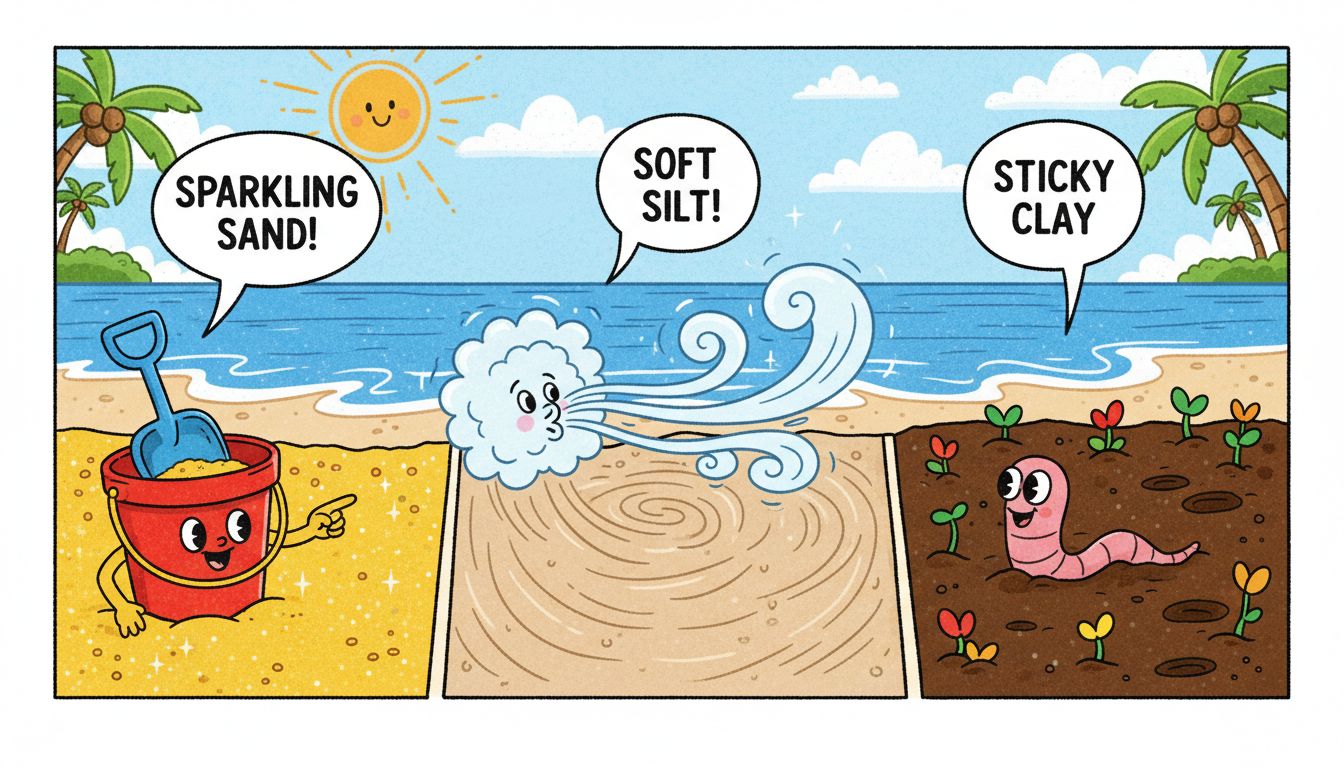
Sand, silt, and clay are types of soil particles that differ in size and texture. Sand is coarse and gritty, silt is smooth and powdery, and clay is fine and sticky when wet. Understanding these differences is crucial for gardening and farming.
Sand, silt, and clay are three fundamental components of soil, each playing a unique role in how soil behaves and how plants grow. The differences between these particles primarily lie in their size, texture, and how they interact with water and nutrients.
**Sand** is the largest of the three particles, typically ranging in size from 0.05 to 2 millimeters. When you touch sand, you can feel its rough, gritty texture. This larger particle size allows water to drain quickly through sandy soil, which can be both beneficial and detrimental. For plants, this means that while their roots can access water quickly after rain, sandy soil can also dry out rapidly, requiring more frequent watering. Gardeners often add organic matter to sandy soil to improve its water retention.
**Silt**, on the other hand, consists of smaller particles, measuring between 0.002 and 0.05 millimeters. It has a soft, smooth, and powdery feel, much like flour. Silt retains moisture better than sand, making it a good choice for growing certain crops. However, while it holds water, it can also become compacted, which may hinder root growth. Farmers often appreciate silt for its ability to hold nutrients, making it an essential component for fertile soils.
**Clay** is the finest of the three, with particles less than 0.002 millimeters in size. It is so small that you often cannot see it without a microscope. Clay feels sticky when wet and smooth when dry. This characteristic makes clay excellent at holding water and nutrients, which is beneficial for plants, but it can also lead to poor drainage. In heavy rains, clay soils can become waterlogged, which may suffocate plant roots. Gardeners often mix clay with sand or organic matter to improve drainage and aeration.
The combination of sand, silt, and clay in soil is termed soil texture, and it greatly influences how soil functions. For instance, loamy soil, which is a balanced mix of sand, silt, and clay, is often considered ideal for gardening because it provides good drainage while retaining enough moisture and nutrients for healthy plant growth.
Understanding these differences is crucial for anyone involved in gardening or farming. By knowing the composition of their soil, farmers and gardeners can make informed decisions about what to plant and how to manage their land effectively. For example, if you have sandy soil, you might choose drought-resistant plants, while in clay-heavy soil, you might need to amend it to improve drainage before planting.
In summary, sand, silt, and clay are vital components of soil that affect its texture, drainage, moisture retention, and nutrient availability. Recognizing the differences among these particles can lead to more successful gardening and farming practices.
Was this answer helpful?