
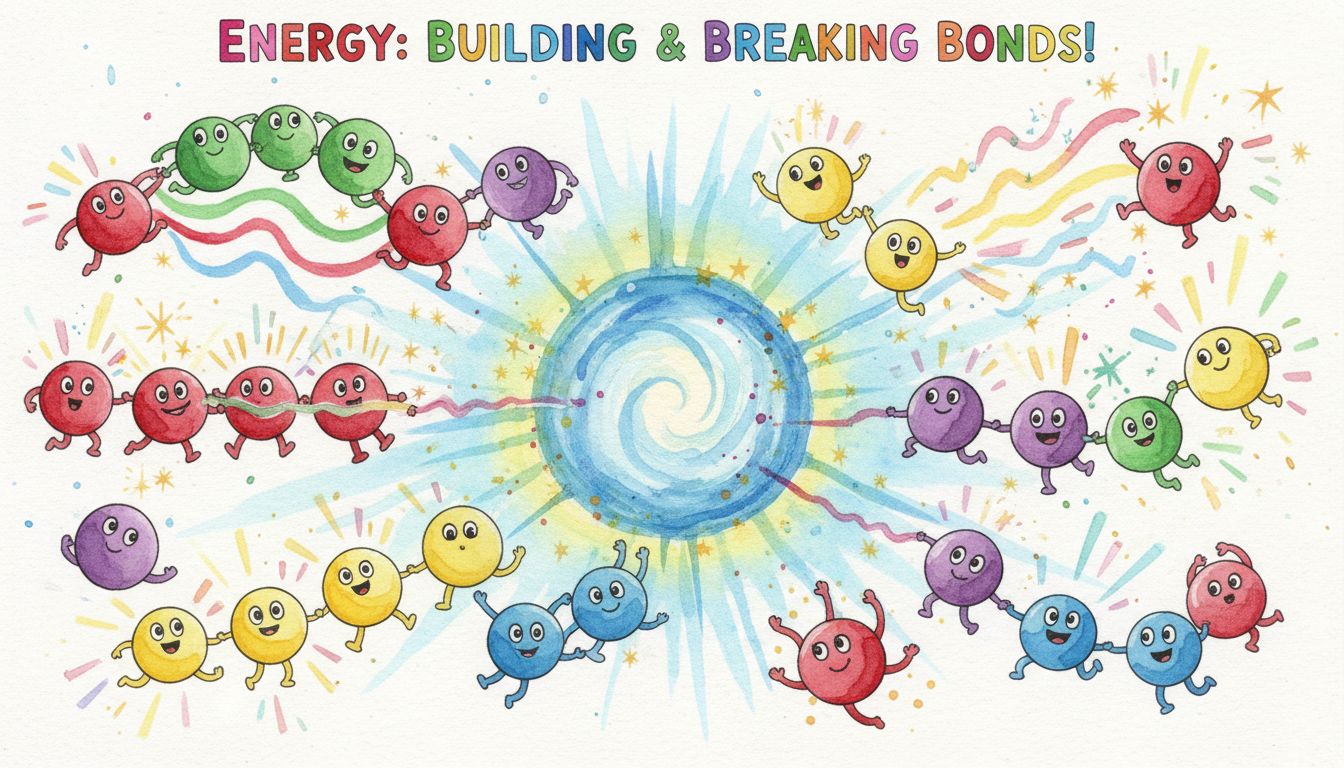
Is Energy Required to Break Chemical Bonds Always Equal?
Quick Answer
Yes, the energy required to break a chemical bond is always equal to the energy released when that bond is formed. This concept is known as bond dissociation energy and illustrates the equal and opposite nature of energy in chemical reactions.
In chemistry, understanding the relationship between breaking and forming chemical bonds is crucial. When a chemical bond is broken, energy must be absorbed; this is known as bond dissociation energy. Conversely, when a bond is formed, that same amount of energy is released. This principle is often summarized by stating that the energy values are equal but opposite in direction.
For instance, consider the hydrogen molecule (H2). When the bond between two hydrogen atoms is broken, it requires 436 kJ/mol of energy. This energy is needed to overcome the attractive forces holding the atoms together. Once the bond is formed again, the same amount of energy, 436 kJ/mol, is released into the environment. This process illustrates the conservation of energy and is a fundamental concept in thermodynamics and chemical reactions.
Real-world applications of this concept can be seen in various fields. For example, in combustion reactions, such as burning fuels, the energy absorbed to break the bonds in reactants is converted into energy released when new bonds form in the products. Understanding this energy exchange helps chemists design more efficient chemical processes, whether in industrial applications or in developing new materials.
It's also worth noting that bond strength can vary between different types of bonds. Single bonds, double bonds, and triple bonds have different bond dissociation energies. For example, a double bond in oxygen (O=O) is stronger than a single bond in hydrogen (H-H), which means it requires more energy to break. Thus, while the principle that energy absorbed equals energy released holds true, the specific amounts will vary based on the type of bond being formed or broken.
In summary, recognizing that the energy to break a bond is equal to the energy released when that bond is formed is essential for understanding chemical reactions. This principle not only highlights energy conservation but also underscores the intricate balance of forces at play in chemical processes.
Was this answer helpful?