
How Does Pollution Affect Marine Life and Habitats?
Quick Answer
Pollution, especially water and land pollution, significantly harms marine life. It can lead to habitat destruction, threaten species survival, and disrupt ecosystems.
Pollution is a pressing global issue that affects various ecosystems, particularly marine environments. When we refer to pollution in coastal areas, we often mean both water pollution and land pollution. Water pollution occurs when harmful substances, such as chemicals, oils, or trash, enter the ocean, while land pollution refers to the contamination of land areas, often due to waste disposal. In this context, let's explore how these forms of pollution impact marine life and habitats.
**Types of Pollution**
In the case of a seal lying on a dirty beach, we can identify two main types of pollution: water pollution and land pollution. The seal's habitat appears contaminated, suggesting that pollutants have either washed ashore or are leaching from the land into the ocean. Common pollutants include:
- **Oil spills**: Often from boats or offshore drilling, oil spills create a slick on the water's surface, suffocating marine life and coating the feathers of seabirds.
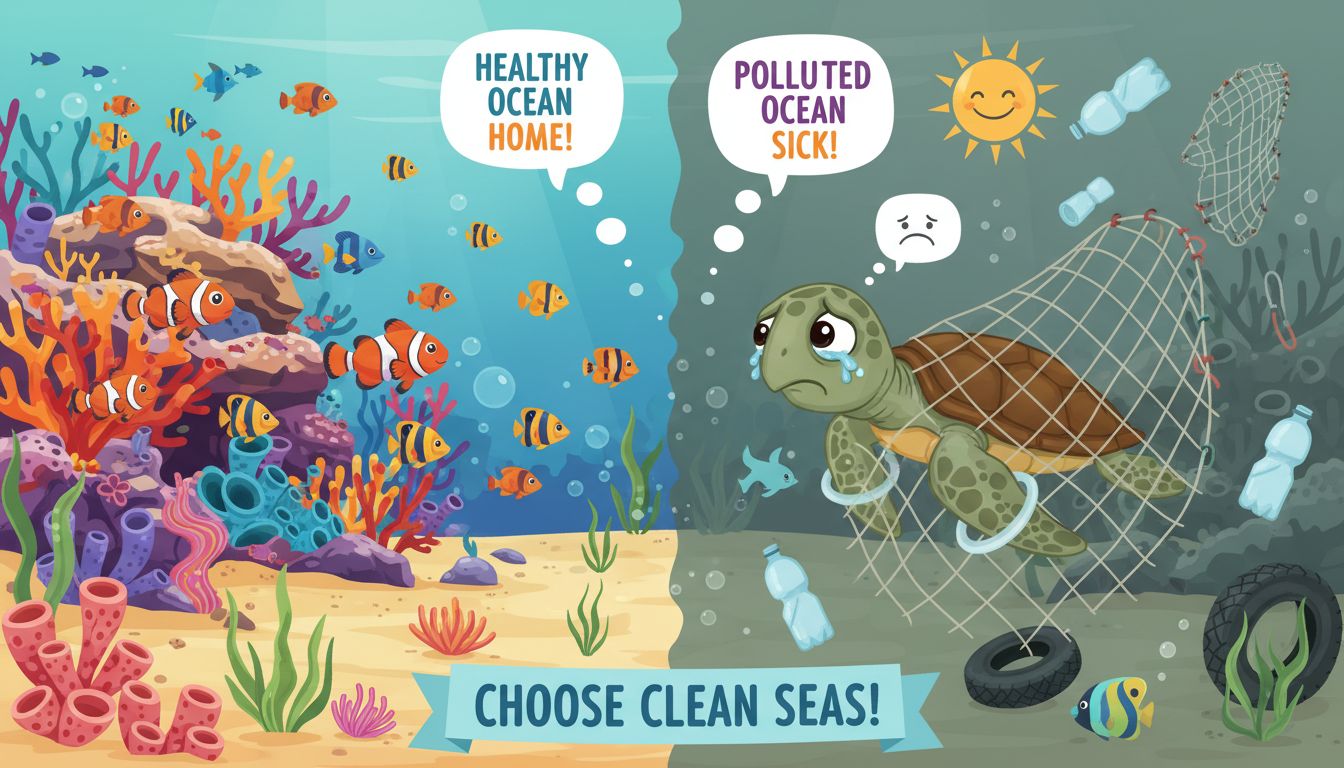
- **Plastic waste**: Items such as bottles, bags, and fishing nets can entrap wildlife or be ingested by marine animals, leading to injury or death.
- **Chemical runoff**: Fertilizers and pesticides from agricultural areas can wash into the ocean, causing harmful algal blooms that deplete oxygen and create dead zones.
**How Humans Cause Pollution**
Human activities are largely responsible for the pollution seen in marine environments. Some significant contributors include:
- **Littering and waste disposal**: Many people irresponsibly dispose of trash, often leading to waste being washed into the ocean during rainstorms.
- **Industrial discharges**: Factories may release toxic substances directly into waterways, harming aquatic life.
- **Urban runoff**: Stormwater runoff from cities carries pollutants, including oils and heavy metals, directly into the ocean.
**Effects on the Environment**
The consequences of pollution are dire for marine ecosystems. Here are some of the most significant effects:
1. **Habitat destruction**: Polluted waters can lead to the degradation of crucial habitats like coral reefs, which serve as breeding grounds for many species.
2. **Health of marine species**: Fish and other marine animals may suffer from diseases due to exposure to pollutants, leading to decreased populations and biodiversity losses.
3. **Food chain disruption**: When smaller organisms, such as plankton, are affected by pollution, this can have a cascading effect on the entire food chain, ultimately impacting larger predators, including humans.
**Conclusion**
Understanding the impacts of pollution on marine life is essential for fostering environmental stewardship. By learning about these issues, we can advocate for cleaner oceans and healthier ecosystems. Engaging in activities like beach clean-ups, reducing plastic use, and supporting policies that protect marine habitats can all contribute to mitigating pollution. Together, we can work towards a more sustainable future for our oceans and the life they support.
Was this answer helpful?