
What Role Do Bacteria and Organisms Play in Soil Health?
Quick Answer
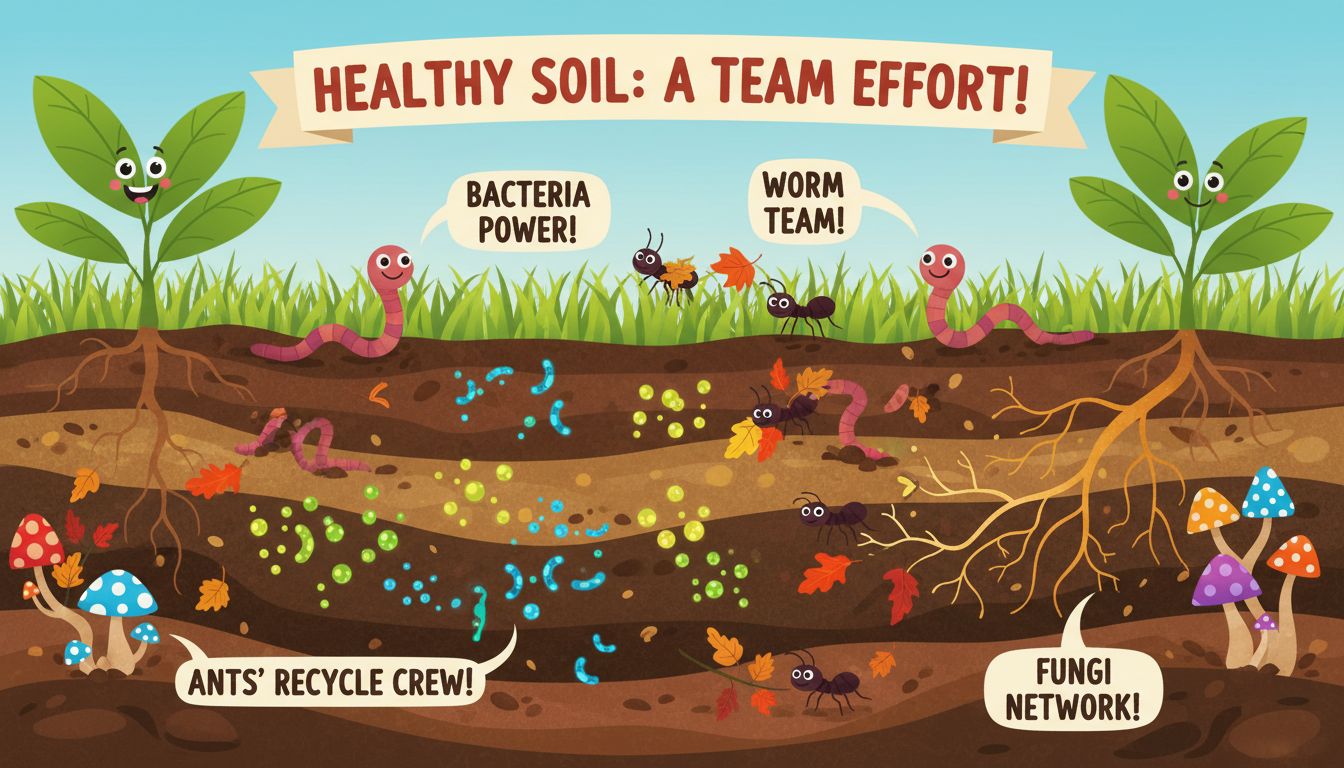
Bacteria, insects, and burrowing mammals in the soil play a crucial role in breaking down organic matter, turning it into nutrients that support plant growth. This decomposition process is vital for maintaining healthy soil ecosystems.
Bacteria, insects, and burrowing mammals are essential components of healthy soil ecosystems. They contribute significantly to the breakdown of organic matter, which is vital for nutrient cycling and soil health. When leaves, dead animals, and other organic materials decompose, these organisms help convert them into nutrients that plants can absorb, promoting their growth and overall ecosystem stability.
**Bacteria**: Soil bacteria are microscopic organisms that play a key role in the decomposition process. They break down complex organic materials into simpler compounds, which are then accessible to plants. For instance, when bacteria decompose dead plant matter, they release nutrients like nitrogen, phosphorus, and potassium into the soil, which are essential for plant health. In a gram of healthy soil, there can be between 1 million to 1 billion bacteria, illustrating their abundance and importance.
**Insects**: Various insects, such as ants and beetles, contribute to soil health by aerating the soil and aiding in the decomposition process. As they move through the soil, they help mix organic matter with soil particles, enhancing nutrient availability. Additionally, their waste products add more nutrients back into the soil, further enriching it.
**Burrowing Mammals**: Animals like earthworms, moles, and gophers also play a critical role in maintaining soil health. Earthworms, for example, consume organic matter and excrete it in a more nutrient-rich form, known as worm castings. This process not only adds nutrients to the soil but also improves soil structure, making it more porous and better at retaining water.
The interaction between these organisms creates a thriving ecosystem within the soil, making it crucial for the growth of plants and maintaining biodiversity. Furthermore, when soils experience excessive evaporation, it can lead to long-term negative impacts such as salinization, where dissolved minerals and salts are left behind as water evaporates. This accumulation can harm plant growth and disrupt the delicate balance of soil life.
In conclusion, the roles of bacteria, insects, and burrowing mammals in soil are interconnected and vital for the health of our ecosystems. By supporting the breakdown of organic matter, these organisms help sustain plant life, contributing to food production and ecological balance in our environment.
Was this answer helpful?