
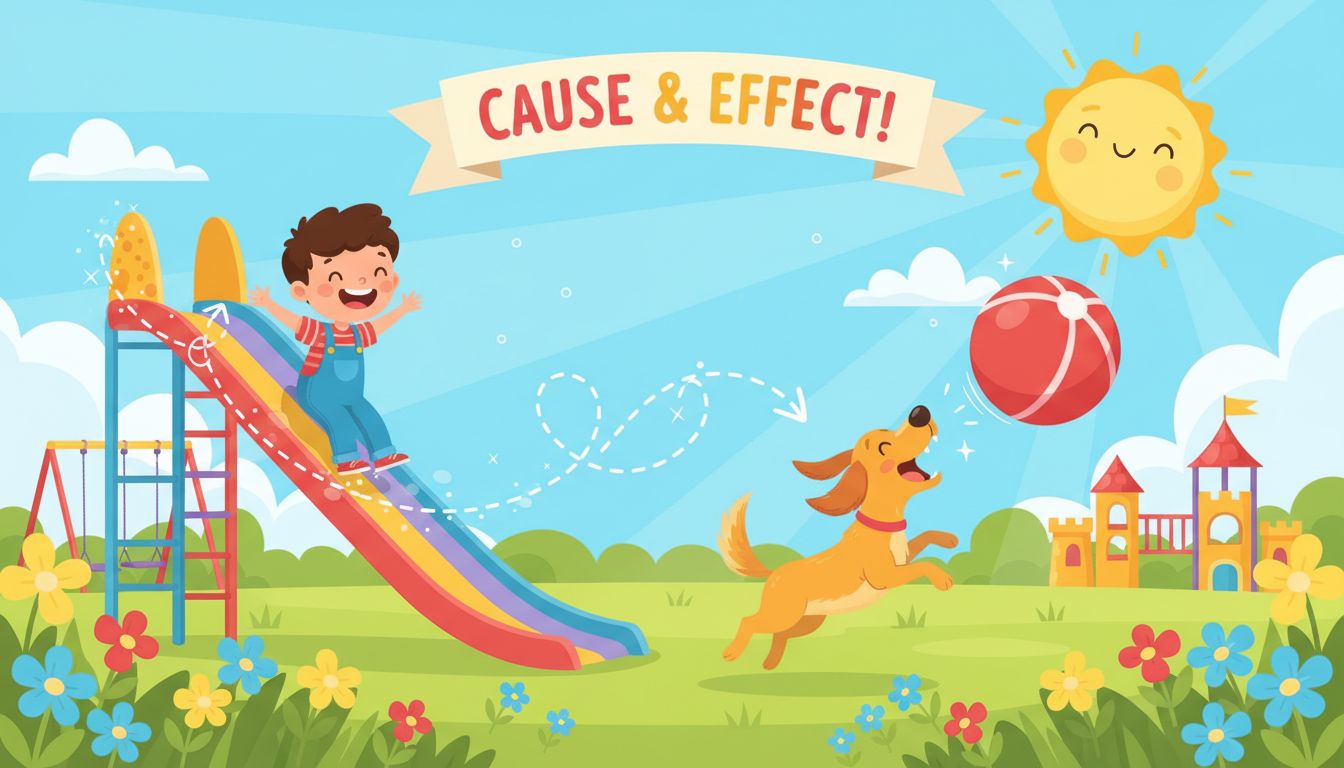
Understanding Stimulus and Response in Everyday Situations
Quick Answer
In behavioral studies, a stimulus triggers a response. For example, a green pedestrian light (stimulus) leads a person to walk across the street (response). Learning to identify these can enhance your understanding of human behavior.
In everyday life, we encounter various stimuli that prompt responses. Understanding this relationship is crucial in fields like psychology, biology, and even everyday decision-making. A stimulus is anything that incites a reaction or behavior, while a response is how an individual reacts to that stimulus. Let's break down some examples to clarify these concepts further.
Consider the scenario of receiving a notification on your phone. When your phone buzzes with an incoming message, this notification acts as a stimulus. The response could be looking at your phone to check the message or even picking it up to respond. This example illustrates how stimuli and responses can occur quickly and almost automatically in our daily lives.
Now, let’s examine another case involving traffic signals. When you see a green pedestrian light, this signal serves as a stimulus. The appropriate response is for a pedestrian to feel safe and start walking across the street. In this instance, the stimulus is crucial for guiding behavior—without it, pedestrians might hesitate or act unpredictably.
Another example involves a classroom setting. Imagine a student sitting at a desk with a question on the board. The question serves as a stimulus, prompting the student to think and write down their answer. Here, the stimulus isn't just a visual cue; it also engages the student's cognitive processes, leading to a thoughtful response.
Understanding these concepts can help students improve their observational skills and their ability to analyze situations. In psychology, recognizing stimuli and responses is fundamental for studying behavior and learning. It can also assist in developing critical thinking skills, as students learn to discern how various factors influence actions in different scenarios.
Real-world applications of this knowledge are vast. For instance, marketers often utilize stimuli to elicit specific responses from consumers, such as using eye-catching advertisements (the stimulus) to encourage purchases (the response). Similarly, educators can design lessons that serve as stimuli, aiming for engaged and thoughtful responses from students.
In summary, recognizing the relationship between stimuli and responses enhances our understanding of human behavior and decision-making. By practicing this skill, students can apply it to various subjects and real-life situations, enhancing their critical thinking and analytical abilities.
Was this answer helpful?