
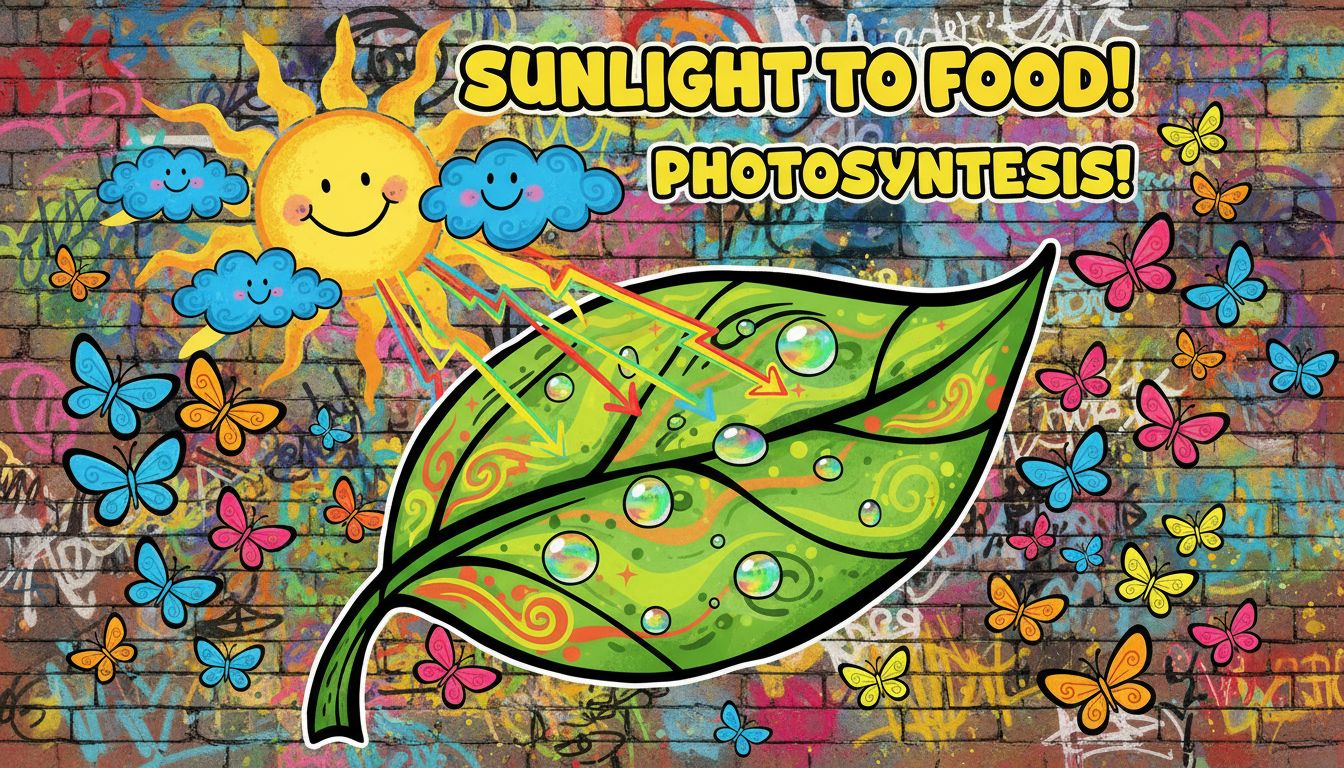
What is Photosynthesis and Why is it Endothermic?
Quick Answer
Photosynthesis is the process by which plants absorb sunlight to convert carbon dioxide and water into glucose and oxygen, making it an endothermic reaction. This means it requires energy from the environment, specifically sunlight, to occur.
Photosynthesis is a fascinating and essential process that allows plants to create their own food using sunlight. This process is classified as an endothermic reaction, which means it absorbs energy from its surroundings—in this case, sunlight.
During photosynthesis, plants take in carbon dioxide from the air and water from the soil. When sunlight hits the chlorophyll in plant leaves, it energizes the chlorophyll molecules, initiating a series of chemical reactions. These reactions transform carbon dioxide and water into glucose, a type of sugar that serves as food for the plant. Oxygen is produced as a byproduct and released back into the atmosphere, which is crucial for the survival of most living organisms on Earth.
The basic equation for photosynthesis can be represented as follows:
6 CO₂ + 6 H₂O + light energy → C₆H₁₂O₆ + 6 O₂
Here, you can see that light energy is a necessary component for the reaction to occur, highlighting its endothermic nature. Without sunlight, plants cannot perform photosynthesis and, therefore, cannot produce food.
To understand photosynthesis in a real-world context, consider the importance of this process in our ecosystem. Plants, through photosynthesis, form the foundation of the food chain. They provide energy not only for themselves but also for herbivores that eat them and, subsequently, for carnivores that eat the herbivores.
Additionally, photosynthesis plays a critical role in regulating atmospheric carbon dioxide levels. As plants absorb CO₂ during photosynthesis, they help mitigate climate change by reducing greenhouse gases in the atmosphere.
In contrast, other processes mentioned, such as burning wood, condensation, and rusting of iron, are exothermic reactions. These reactions release heat energy into the environment:
- **Burning wood**: This process releases energy in the form of heat and light, making it exothermic.
- **Condensation**: When water vapor cools and turns into liquid water, it releases energy, also an exothermic reaction.
- **Rusting of iron**: This slow reaction between iron, oxygen, and moisture releases energy, categorized as exothermic.
In summary, photosynthesis is a vital endothermic process that sustains plant life and supports the overall ecosystem by providing energy and oxygen. Understanding this process is crucial for appreciating the interconnectedness of life on Earth and the role of plants in maintaining ecological balance.
Was this answer helpful?