
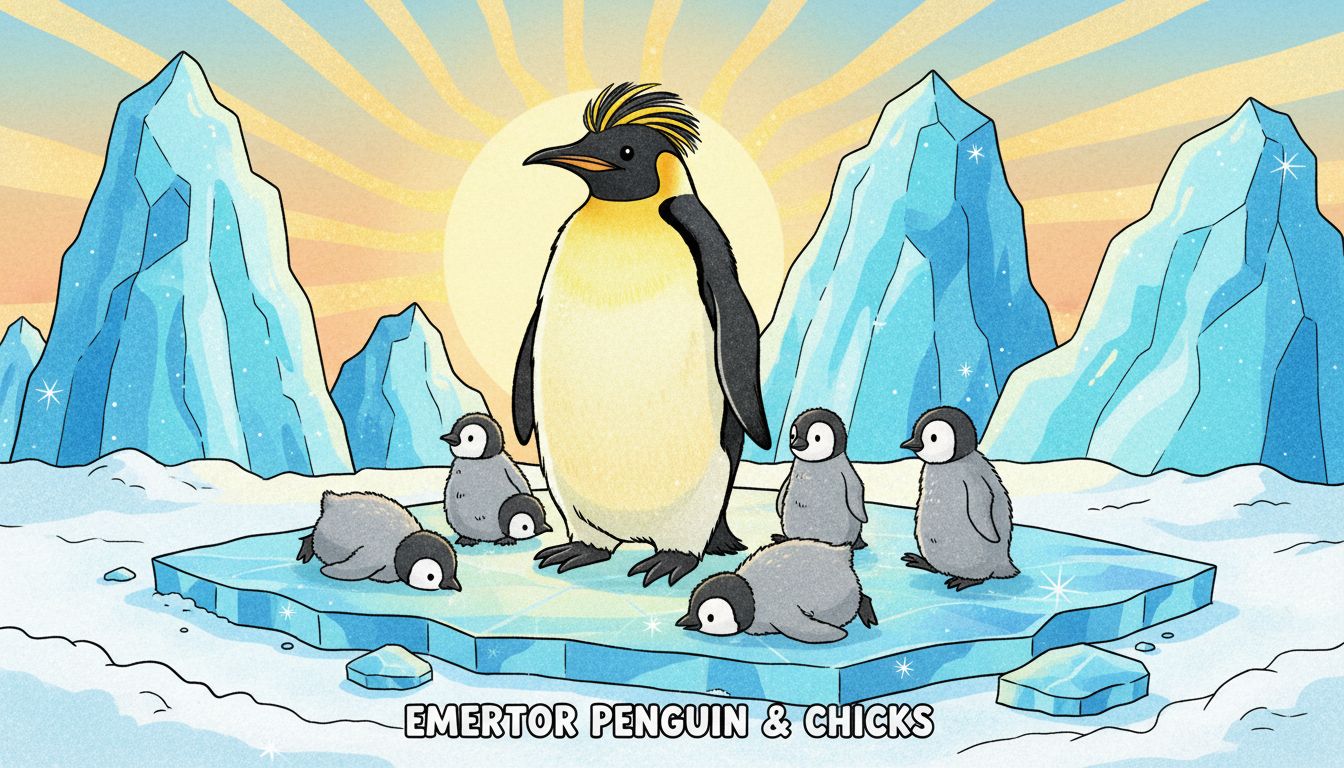
What Makes the Emperor Penguin Unique? A Student's Guide
Quick Answer
Emperor penguins are the largest penguin species and are uniquely adapted to the harsh Antarctic climate. They can't fly but are remarkable swimmers, using their flippers to navigate icy waters while caring for their young in a special way.
Let’s dive deeper into the captivating world of the emperor penguin! These remarkable birds are the largest of all penguin species, standing about 3 to 4 feet tall and weighing between 50 to 100 pounds. They inhabit Antarctica, one of the coldest places on Earth, where temperatures can plummet to -40 degrees Fahrenheit. To withstand this extreme cold, emperor penguins have a thick layer of blubber and densely packed feathers that provide insulation. Their feathers are waterproof, which helps keep them warm and dry while swimming.
Unlike many birds, emperor penguins cannot fly. Instead, they are exceptional swimmers, using their flippers to propel themselves through the frigid waters of the Southern Ocean. They can dive to depths of over 1,800 feet and hold their breath for up to 20 minutes while hunting for fish, squid, and krill. This incredible swimming ability is essential for their survival, as they rely on these food sources to sustain themselves and their young.
One of the most fascinating aspects of emperor penguin life is their unique breeding process. Unlike most birds, emperor penguins breed during the harsh Antarctic winter. After mating, the female lays a single egg and transfers it to the male, who keeps it warm by balancing it on his feet and covering it with a flap of skin called a brood pouch. This remarkable adaptation protects the egg from the freezing temperatures while the female goes on a long journey to find food.
As the female is away for several weeks, the male fasts and keeps the egg safe, braving fierce winds and snowstorms. Once the female returns, she feeds the chick with a special milk-like substance produced in her stomach. Both parents take turns caring for their chick until it is ready to leave the nest and venture into the icy world.
Emperor penguins are not just fascinating because of their size and adaptations; they also exhibit complex social behaviors. They are known to huddle together for warmth, especially during blizzards, forming large groups that can include thousands of individuals. This social behavior helps them conserve heat and protect against the brutal Antarctic weather.
In conclusion, the emperor penguin is a unique and resilient animal that has adapted to thrive in one of the harshest environments on Earth. Their remarkable swimming abilities, caring parental roles, and social behaviors make them a fascinating subject of study for anyone interested in wildlife. Understanding these incredible birds can inspire us to appreciate the diversity of life on our planet and the adaptations that allow animals to survive in extreme conditions.
Was this answer helpful?