
Which Element Loses Electrons to Form Positive Ions?
Quick Answer
Metals, especially those in Group 1 like rubidium (Rb), easily lose electrons to form positive ions (cations). In contrast, gallium (Ga) is less reactive and not the best choice for forming cations.
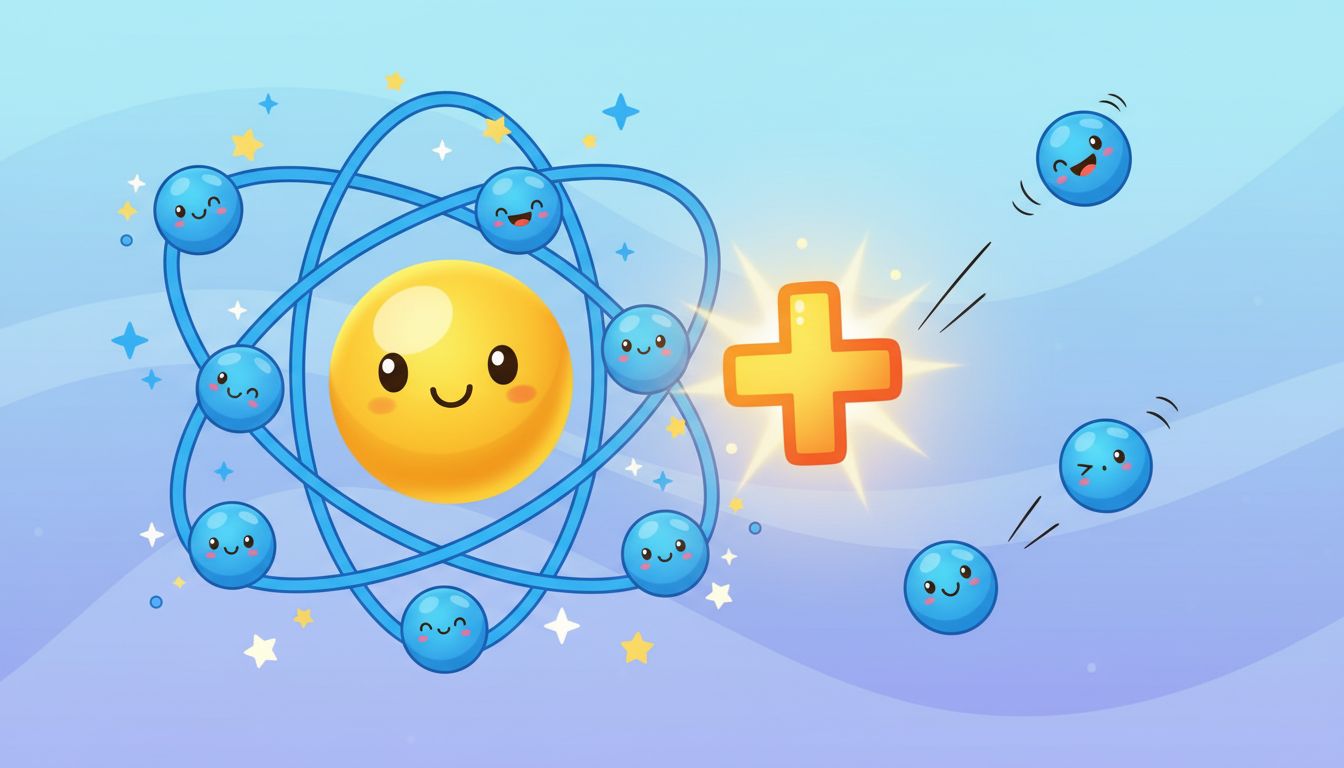
When considering which element is most likely to lose electrons to form positive ions, it's important to understand the reactivity of metals on the periodic table. Cations are formed when atoms lose one or more electrons, resulting in a positively charged ion. Generally, metals are more likely to lose electrons compared to non-metals.
Let's take a closer look at the elements mentioned: gallium (Ga), rubidium (Rb), argon (Ar), and iodine (I).
Rubidium (Rb) is an alkali metal located in Group 1 of the periodic table. Alkali metals are known for their high reactivity and tendency to lose a single electron from their outer shell. This loss of an electron allows them to achieve a stable electronic configuration, forming Rb⁺ ions easily. In practical terms, rubidium is often involved in chemical reactions that demonstrate its ability to form cations readily.
On the other hand, gallium (Ga) is a metal, but it is not as reactive as rubidium. While gallium can lose electrons to form cations, it does so less readily than alkali metals. Gallium typically forms cations like Ga³⁺, but this requires more energy compared to the formation of Rb⁺ ions. This difference is crucial, especially when considering which element is more likely to lose electrons in a given scenario.
Argon (Ar) is a noble gas and is located in Group 18. Noble gases are characterized by their full outer electron shells, making them extremely stable and unreactive. As a result, argon does not lose electrons and does not form cations.
Iodine (I) is a non-metal that typically gains electrons to achieve stability, forming anions like I⁻. Non-metals are generally more likely to gain electrons than lose them, which further distinguishes them from metals.
In summary, when evaluating which of these elements is most likely to lose electrons to form positive ions, rubidium (Rb) stands out as the best choice due to its position in the periodic table and its reactivity. This knowledge is not only vital for understanding basic chemistry concepts but also has practical implications in fields like materials science and electrochemistry, where the behavior of ions plays a critical role in reactions and processes.
Was this answer helpful?