
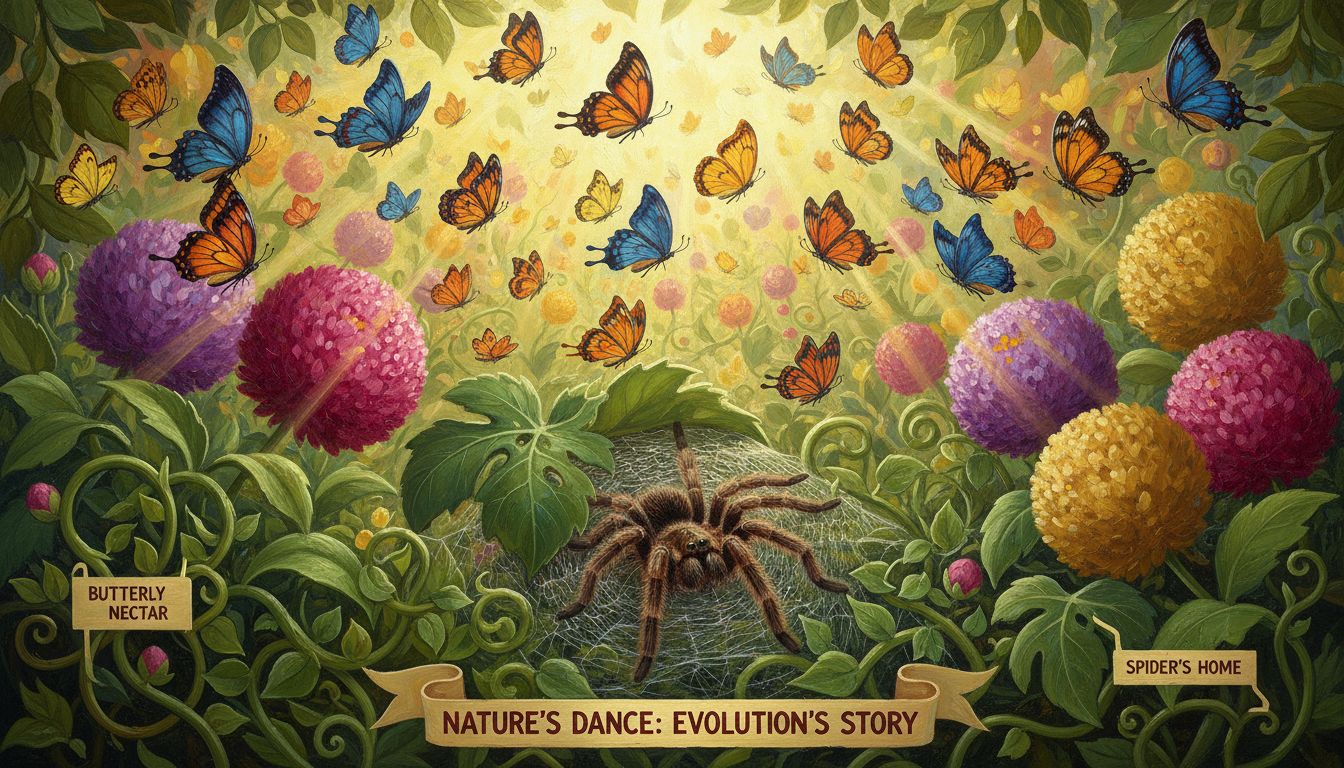
Why Did Butterflies Evolve Before Tarantulas in History?
Quick Answer
Butterflies evolved before tarantulas due to the timeline of insect and arachnid evolution. Insects appeared around 400 million years ago, while spiders, including tarantulas, emerged later, around 380 million years ago.
The question of why butterflies came before tarantulas in the history of life on Earth is a fascinating one that delves into the realm of evolution. To understand this, we need to explore how species evolve over millions of years. Both butterflies and tarantulas are part of the arthropod family, which includes animals with jointed legs and exoskeletons. However, they belong to different groups: butterflies are classified as insects, while tarantulas are arachnids, a group that also includes spiders.
The evolutionary timeline shows that insects were among the first creatures to adapt to life on land. The earliest insect fossils date back approximately 400 million years, during a period known as the Devonian. This was a time when Earth's atmosphere and ecosystems were rapidly changing, and insects were able to thrive and diversify in these new environments. The ancestors of butterflies evolved from these early insects, leading to the colorful and diverse species we see today.
On the other hand, arachnids, including tarantulas, appeared a bit later in the evolutionary timeline, around 380 million years ago. This means that the ancestors of butterflies had already established themselves in various habitats before the first spiders came into existence. You can imagine this process like a race; insects had a head start, allowing them to evolve into many different forms, including the beautiful butterflies we know today.
To put it into a real-world context, think of it like sports teams forming at different times. If one team starts practicing a year earlier than another, they have more time to develop their skills and strategies. Similarly, early insects had more time to adapt, survive, and evolve into various species, including butterflies, before tarantulas and their relatives arrived on the scene.
This evolutionary advantage allowed butterflies to diversify into numerous species with different colors, sizes, and behaviors, adapting to various ecosystems and pollination roles. In contrast, tarantulas, while fascinating and diverse in their own right, followed a different evolutionary path that included adaptations for predation and survival in various environments.
Understanding the order of evolution not only satisfies our curiosity but also helps us appreciate the complexity of life on Earth. Each group of organisms has its unique journey, shaped by environmental changes, adaptations, and survival strategies. By studying these timelines, we can gain insights into the interconnectedness of all living things and the history of our planet's biodiversity.
Was this answer helpful?